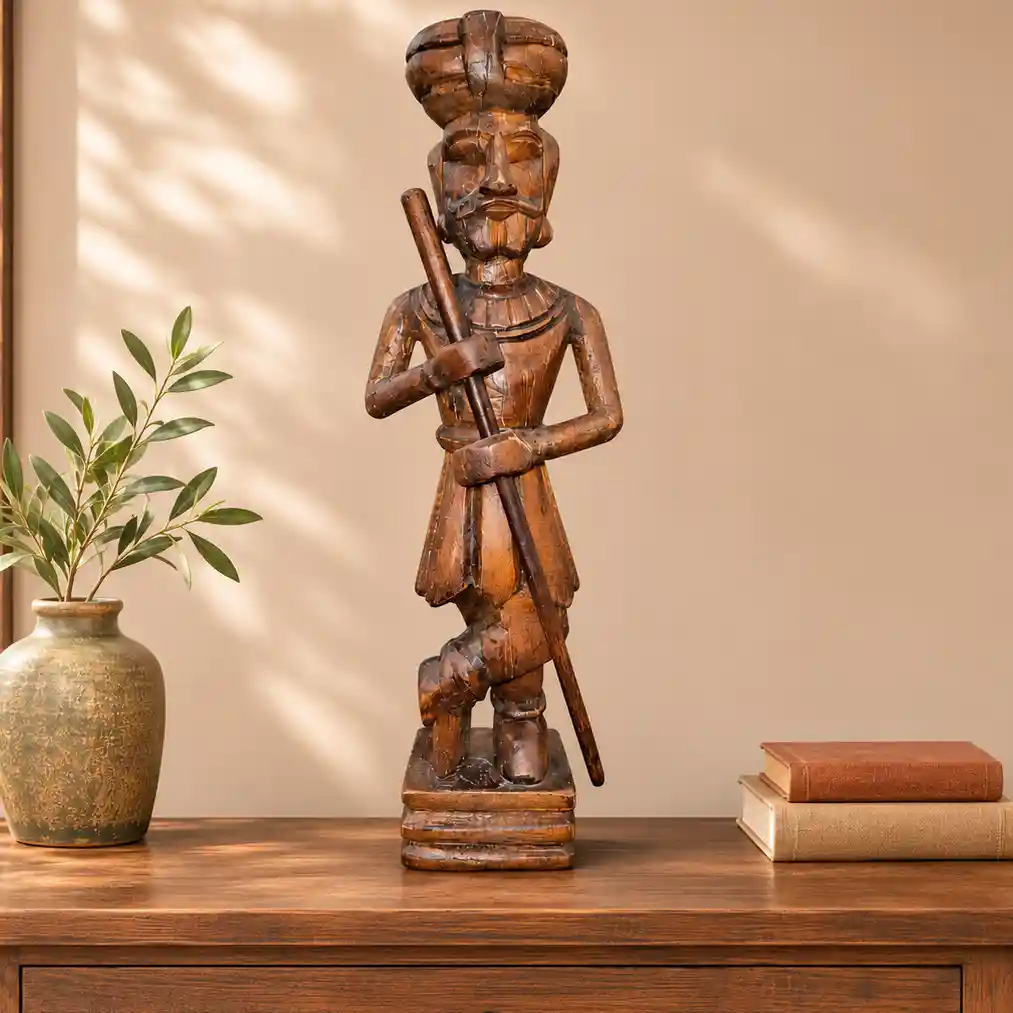
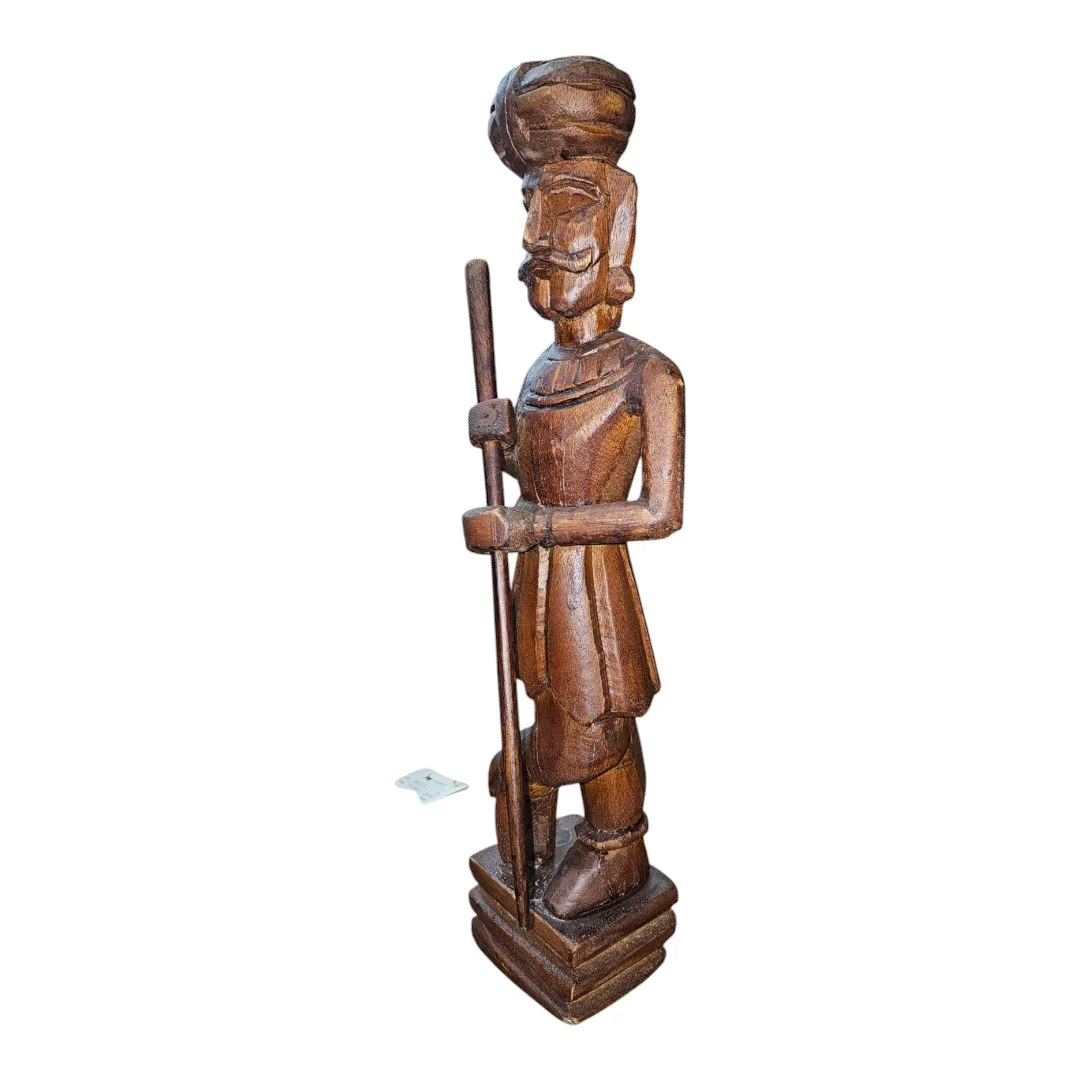
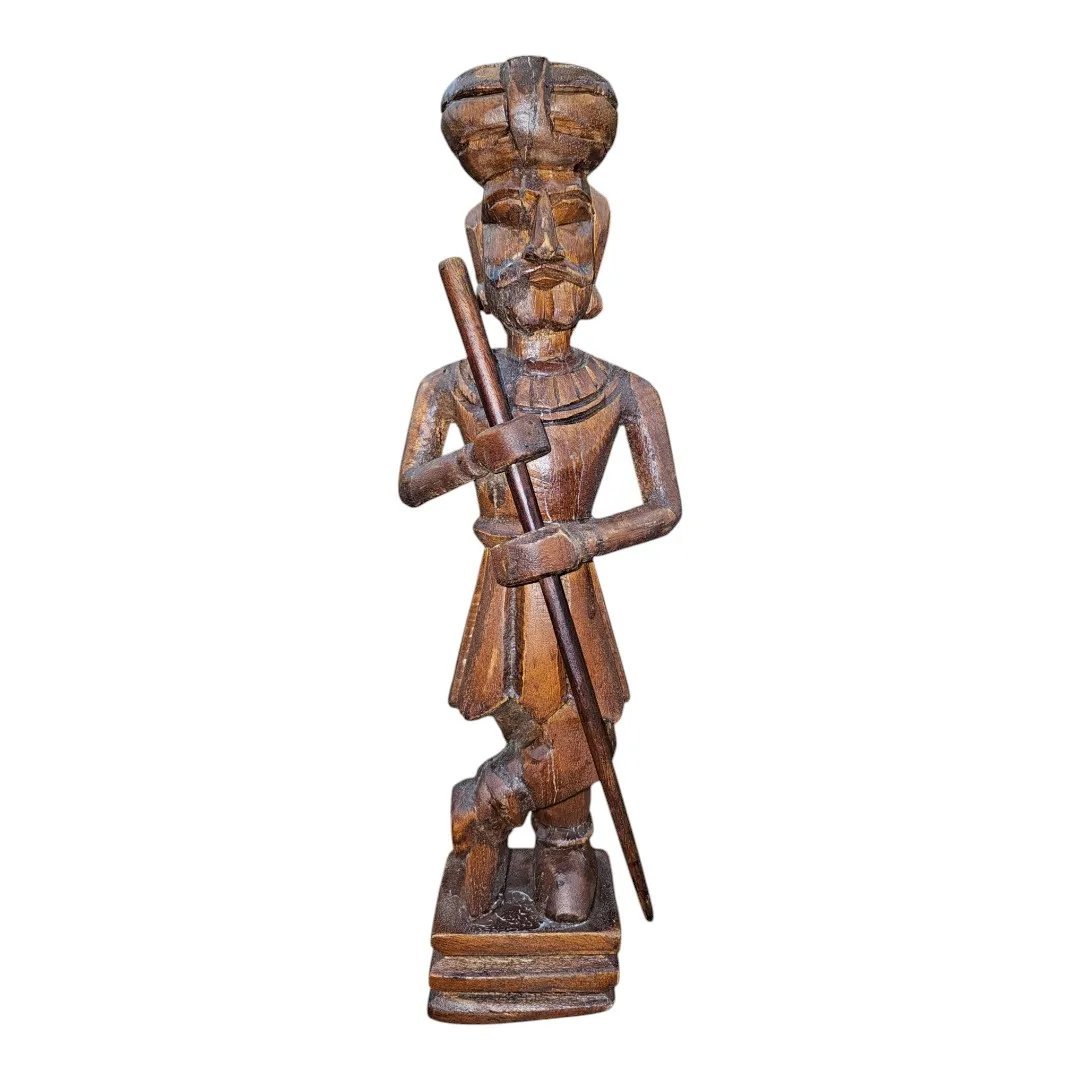
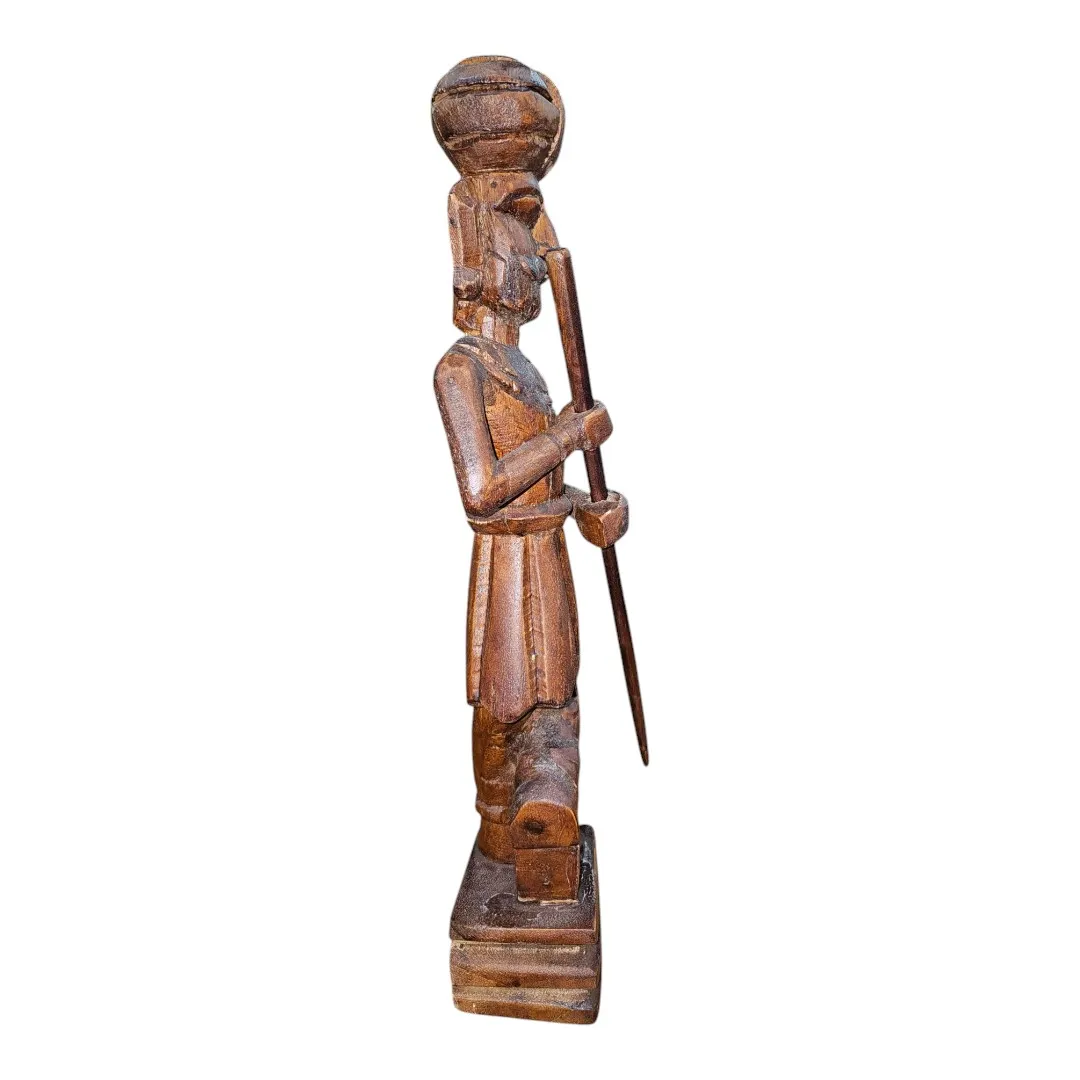
Named Al-Haris Takht-e-Darban—honoring the Arabic concept of the steadfast guardian (Al-Haris) alongside the Indo-Persian courtly sentinel (Darban)—this monumental hand-carved sculpture is conceived as a collectible work of art rather than mere ornament. With its poised crossed-leg posture and carved ceremonial staff, it commands an aura of quiet sovereignty and timeless hospitality.
This sculptural archetype traces its lineage to the royal courts of Rajasthan in northwestern India—specifically the princely states of Jodhpur (Marwar) and Jaipur (Amber) between the 16th and 19th centuries—where Darbans and sacred Dvarapalas guarded the thresholds of Rajput forts, Mughal palaces, and aristocratic havelis. Rooted in ancient South Asian Harappan and Vedic traditions along the Indus and Ganges rivers, the palace guardian evolved into an emblem of chivalric loyalty, vigilance, and noble welcome. The incised floral vines along the angarkha tunic symbolize perpetual prosperity and divine protection over the household, while the tiered pagri turban signifies courtly rank. Today, historic guardians of this lineage remain preserved at the gates of Mehrangarh Fort in Jodhpur, City Palace in Jaipur, and royal collections across Rajasthan.
Executed through hereditary Rajasthani wood-sculpting, each piece begins with seasoned solid hardwood. Master carvers rough out the silhouette before hand-chiseling the serene visage, pleated turban, and intricate botanical reliefs along the garment hem. A slow, meditative waxing process seals the timber while preserving tactile chisel marks—a meditative craft impossible to replicate through industrial machining.
Craftsmanship & Material Excellence Sculpted from dense, seasoned Indian hardwood, the timber possesses a tight, resilient grain that holds razor-sharp chisel planes while resisting structural movement. Natural grain variations and hand-rubbed wax finishes celebrate authentic handcraftsmanship.
Exclusivity & Artistic Value Collected rather than merely bought, each Al-Haris sculpture is an unrepeatable creation signed by the subtle nuances of its maker’s hand—an heirloom artifact destined to appreciate in emotional and aesthetic stature across generations.
Contemporary Relevance In refined contemporary residences across Doha and the wider Gulf, this piece bridges Islamic-Indo courtly heritage with modern architectural minimalism, grounding expansive marble foyers and curated salons with tactile soul.
Style Details
Architectural Influences: Rajput-Mughal fort gateways, historic haveli entrance portals, and classical Indian dvarapala threshold iconography.
Pattern Style: Deep-relief botanical vine carvings along the tunic hem and fluted geometric plinth moldings.
Decorative Elements: Detached hand-carved ceremonial staff (chob), layered crimson-free pagri turban, and exposed natural timber grain.
Craftsmanship Details
Technique & Significance: Hereditary Rajasthani monolithic wood-carving, preserving royal courtly storytelling.
Skill Level Required: Master wood sculptors possessing over 20 years of generational training.
Distinguishing Handcrafted Features: Hand-chiselled facial symmetry and organic distressed wood grain.
Finishing Process: Hand-sanding, natural grain conditioning, and beeswax sealing.
Solid Hardwood Finish Characteristics
Grain & Richness: Dense, fine-grained seasoned Indian hardwood prized for sculptural precision and substantial physical presence.
Depth & Texture: Rich natural dark wood patinas settle into carved recesses, creating dramatic shadow play.
Difference from Mass-Produced Décor: Every chisel stroke reflects living human artistry rather than molded uniformity.
Longevity & Aging Beauty: Seasoned hardwood and natural wax finishes mature gracefully over decades, developing a rich, museum-grade patina.
Why You’ll Love It / Investment Value
Commands a gallery-worthy presence that anchors grand thresholds and reception salons.
Carries a profound historical narrative of royal hospitality, protection, and Indo-Arabian courtly exchange.
Forged from solid seasoned hardwood for enduring, multi-generational permanence.
One-of-a-kind hand-carved execution ensures true collector rarity.
Transforms architectural spaces into curated sanctuaries of heritage and art.
Suggestions for Incorporation
Placement Ideas: Position flanking the entrance to a formal majlis, standing beside a low travertine console, or anchoring a double-height foyer.
Styling Tips: Pair with honed limestone or marble floors, architectural uplighting, and aged brass incense burners to accentuate its rich timber tones.
Lifestyle Use: Serves as a symbolic guardian of welcome in private villas, executive reception suites, and heritage-inspired luxury residences.
Detailed Specifications
Color: Rich natural walnut, deep teak, and warm espresso wood tones.
Finish: Hand-carved, hand-waxed natural matte wood finish.
Origin: Handcrafted in India.
Age/Period Influence: 17th–19th Century Rajput-Mughal Royal Court Heritage.
Perfect For
Formal majlis entrances and grand villa foyers
Curated living salons and architectural gallery niches
Luxury hospitality lobbies and private executive offices
Discerning collectors of South Asian and Indo-Islamic decorative arts
Interior Types
Modern Luxury, Contemporary Arabian, Islamic Architectural, Bohemian Luxe, Eclectic Heritage, Classic European