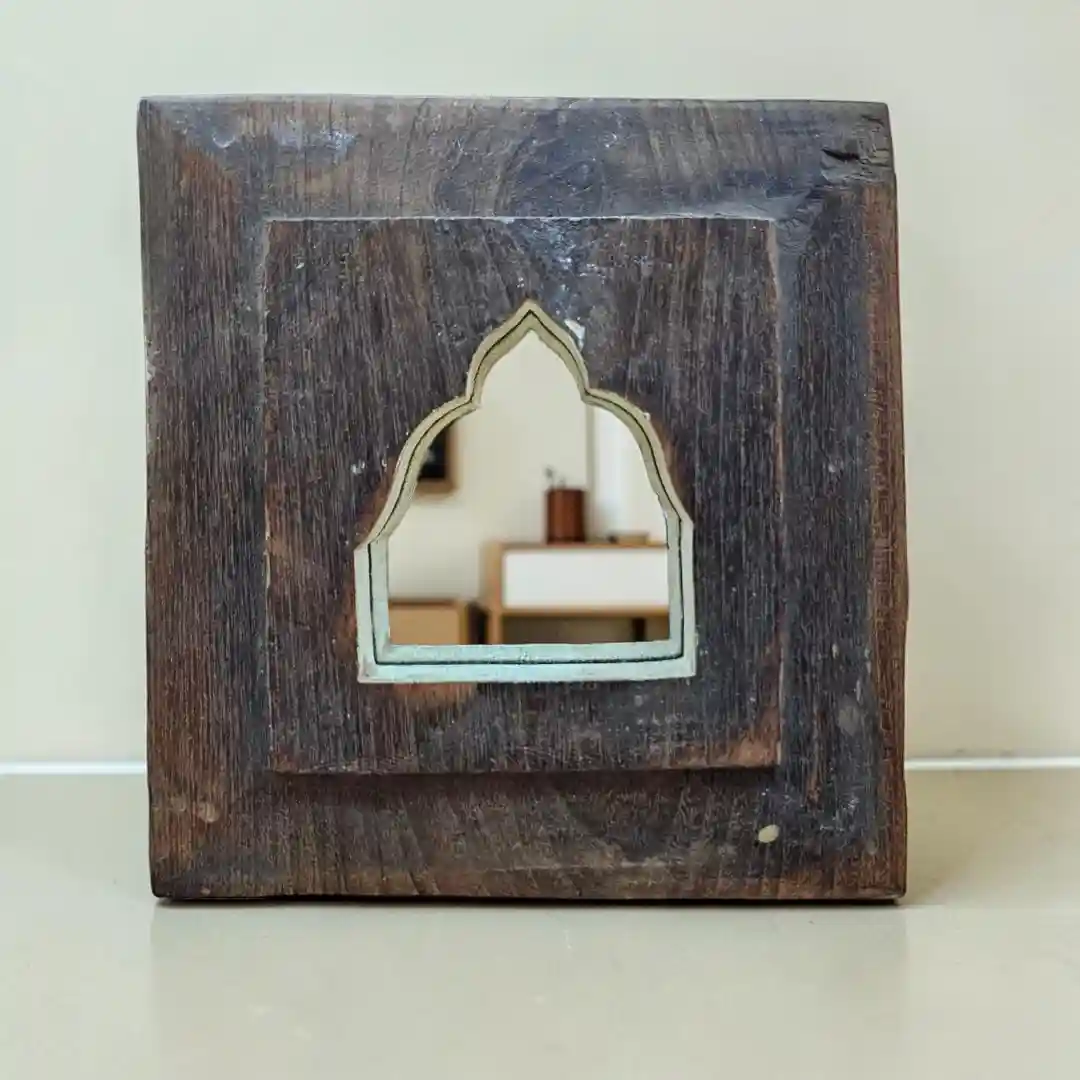
The Jharokha-E-Noor stands as a collectible work of art, named to honor the radiant interplay of light through royal apertures. Its sculptural presence and functional elegance transform a bare vertical plane into a historic architectural vista, echoing the dignified cadence of ancient sanctuaries.
Rooted deeply in the architectural vernacular of the Indian subcontinent—specifically the majestic havelis and palaces of Rajasthan—the jharokha traces its lineage to medieval stonework traditions. Historically designed as projecting oriel windows that allowed rulers to address courtyards or observe street life while remaining cloaked in privacy, these structures represent a masterclass in climatic intelligence and aesthetic prestige. Today, these iconic arched silhouettes can still be admired in the soaring facades of Jaipur’s City Palace and the intricate stone balconies overlooking Lake Pichola in Udaipur. The stepped geometric patterns and cusped arch motifs symbolize spiritual elevation and the union of earth and sky, motifs historically reserved for royal courts and heritage dwellings.
The creation of this piece relies on ancestral Hand Carving techniques. The artisan begins by selecting seasoned solid mango timber, hand-cutting the block to precise dimensions before mapping out the stepped architectural layers. Using specialized chisels and mallets, the carver painstakingly excavates the wood to form the central cusped arch, executing each stroke with generational precision. This time-intensive process requires decades of master expertise, yielding a level of organic soul and structural depth that mass-produced machinery can never replicate.
Fashioned from premium solid mango wood, the frame exhibits a dense, variable grain structure enhanced through a multi-stage hand-waxing and aging process. Subtle tool marks and natural tone shifts serve as authentic testaments to human touch rather than industrial fabrication.
Designed for the contemporary collector who values narrative-rich interiors, this mirror bridges past and present. It integrates seamlessly into modern architectural settings, offering a sophisticated counterpoint to minimalist lines through its profound historical weight and tactile grace.
Style Details
Architectural Influences: Rajasthani haveli fenestration and Mughal palatial arches
Pattern Style: Geometric stepped framing and cusped arch motifs
Decorative Elements: Multi-tiered stepped relief carving and hand-rubbed distressing
Craftsmanship Details
Technique Used: Traditional manual wood carving and stepped dimensional relief
Skill Level Required: Master artisan with decades of generational woodworking expertise
Distinguishing Handcrafted Features: Unique chisel marks, grain variations, and sculpted depth
Finishing Process: Hand-sanded, stained, and sealed with a protective matte wax
Mango Wood Finish Characteristics
Type and Grain Richness: Dense tropical mango hardwood featuring dynamic linear and cathedral grain patterns
Depth and Texture of Finish: Multi-layered matte wax finish offering a velvety, touchable tactile quality
Difference from Mass-Produced Furniture: Unreproducible organic imperfections and individual artisan expression
Longevity and Aging Beauty: Develops a richer, deeper patina over decades of environmental exposure
Why You’ll Love It / Investment Value
Statement-Making Presence: Commands visual attention with architectural gravity and historic resonance
Emotional and Artistic Appeal: Connects daily living spaces to centuries of royal craftsmanship
Heirloom-Quality Durability: Built from solid hardwood designed to endure across generations
One-of-a-Kind Craftsmanship: No two pieces share identical grain patterns or chisel signatures
Elevates Interiors: Transcends basic wall decor to anchor rooms with cultural prestige
Suggestions for Incorporation
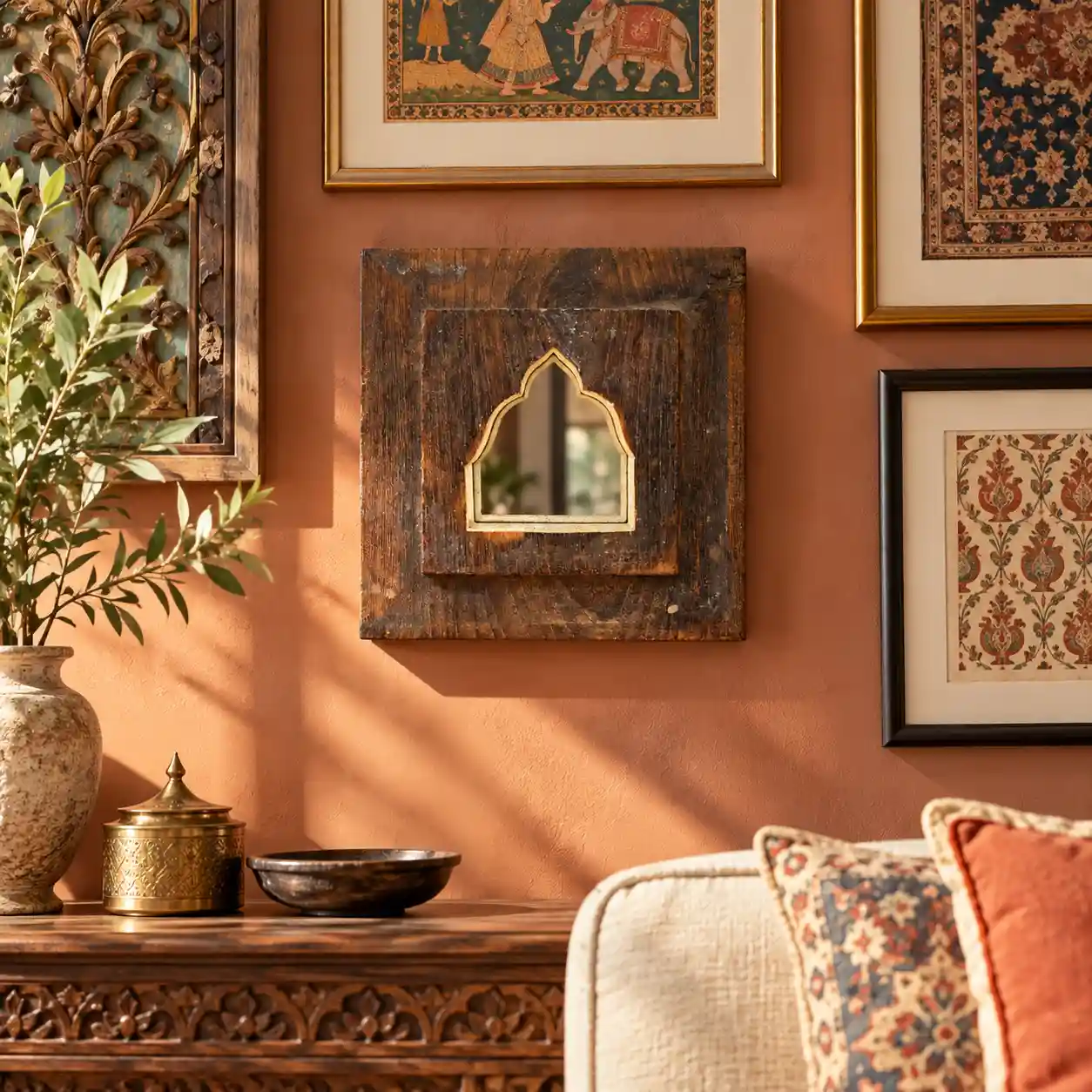
Placement Ideas: Grand entryways, intimate dressing suites, or above a minimalist console table
Styling Tips: Pair with warm brass sconces, trailing botanicals, or aged ceramic vessels to accentuate its organic origin
Lifestyle Use: Serves as a reflective daily focal point for mindful morning rituals and ambient interior styling
Detailed Specifications
Color: Deep espresso, charcoal undertones, and warm natural wood warmth
Finish: Hand-rubbed matte wax and aged protective sealant
Origin: Crafted by master artisans in Rajasthan, India
Age/Period Influence: Classical Indian architectural revival
Perfect for
Room Placements: Foyers, hallways, intimate bedrooms, and transitional living spaces
Functional Uses: Decorative wall accent, spatial expansion, and aesthetic reflection
Interior Types
Modern Luxury, Bohemian, Transitional Heritage, Eclectic Artisanal, Global Nomad