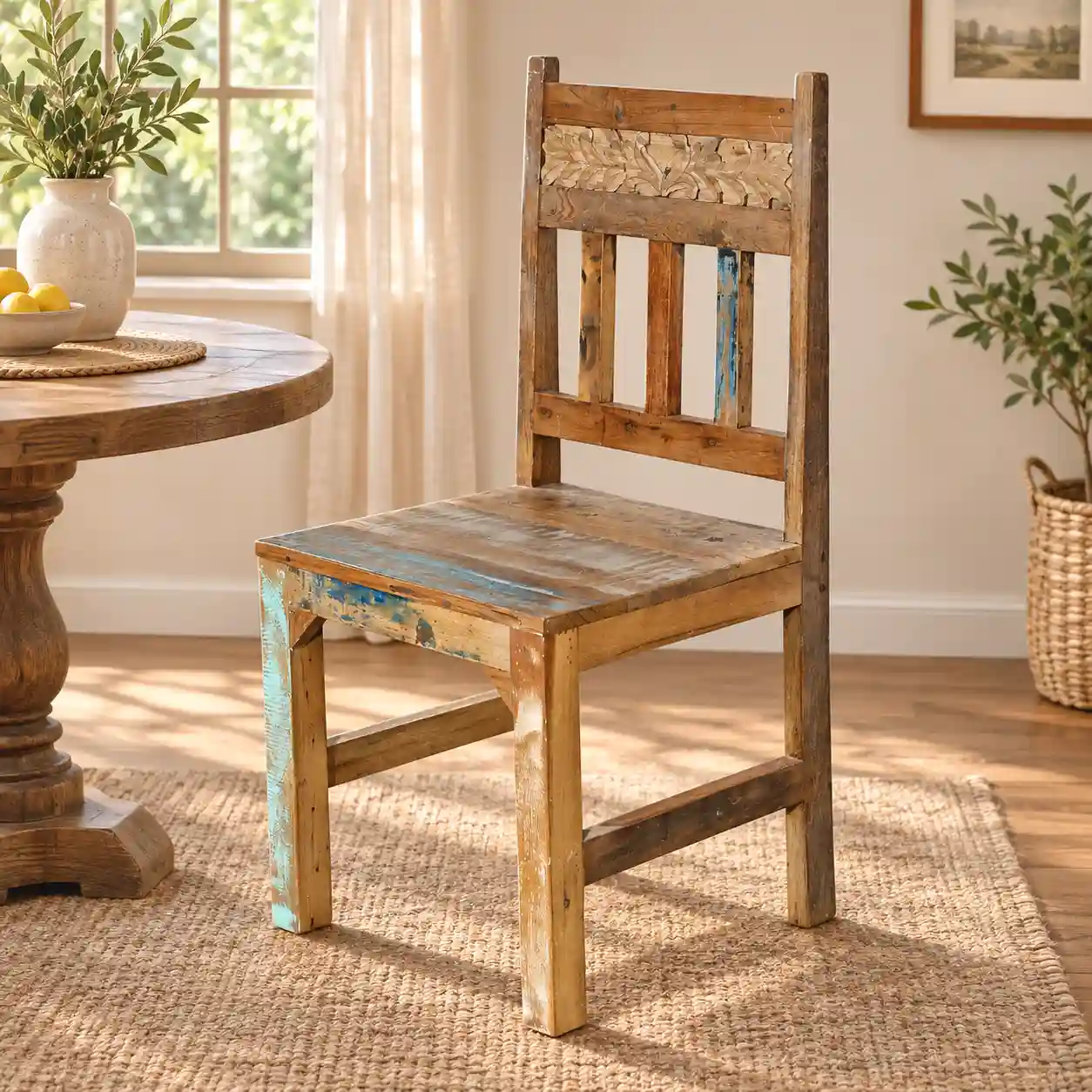
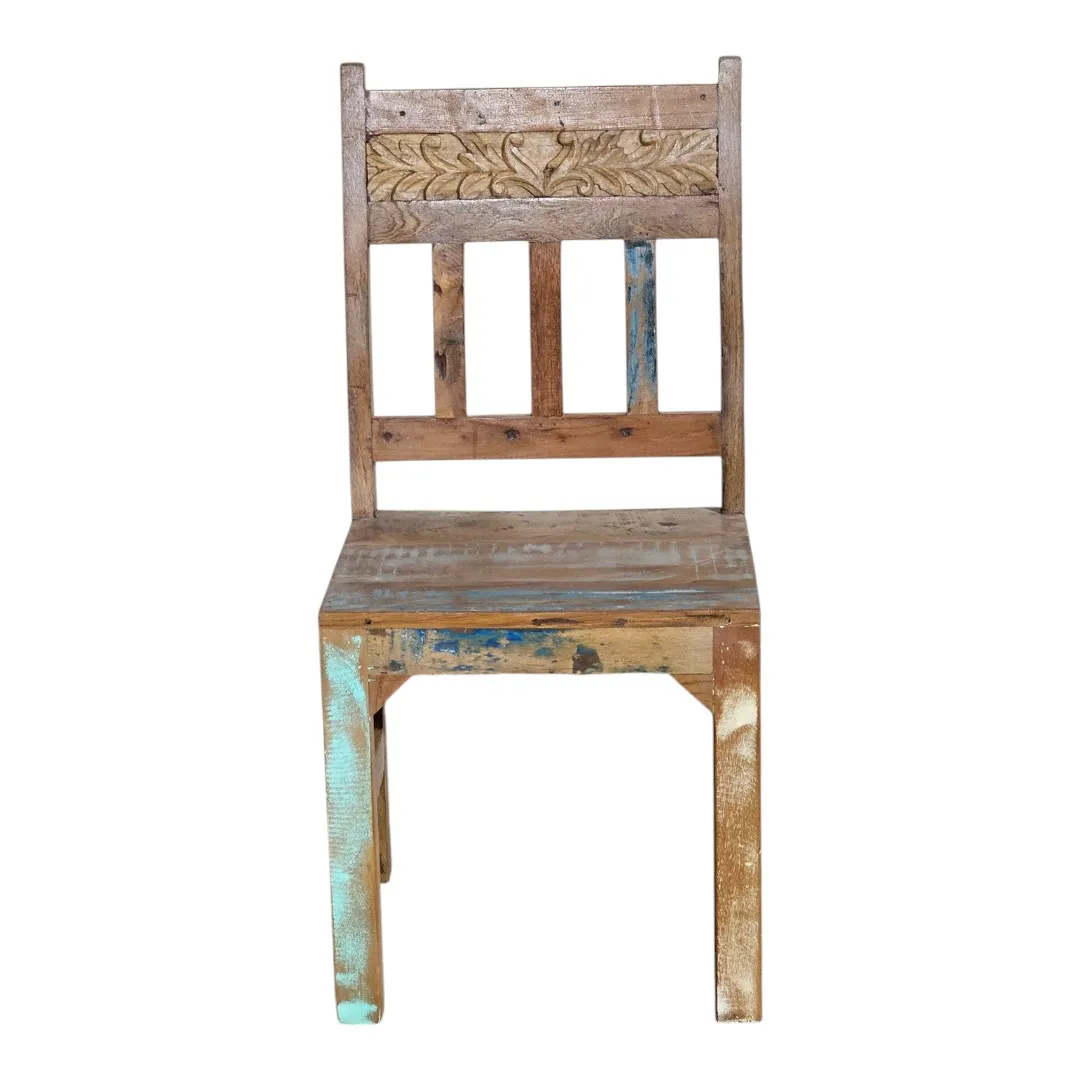
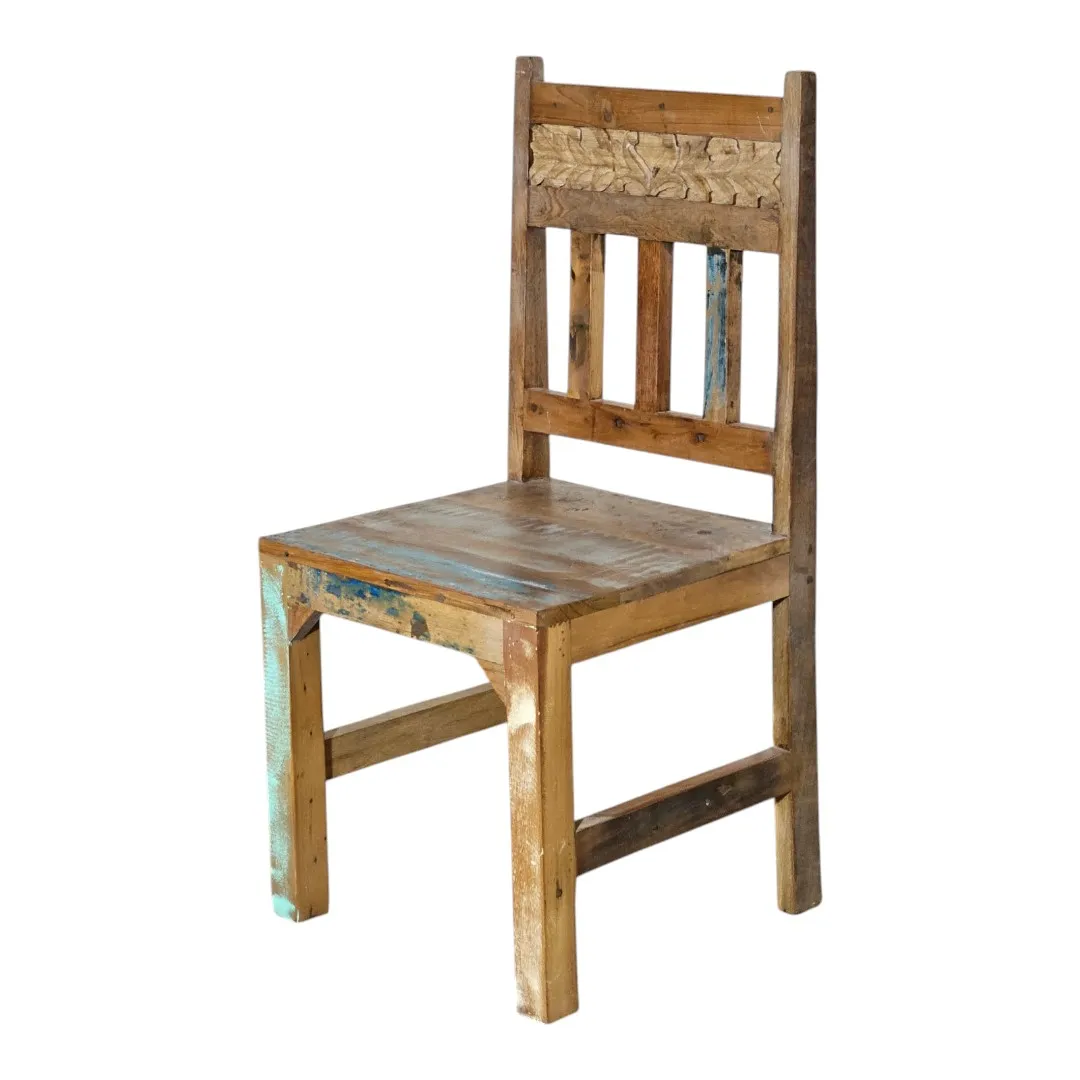
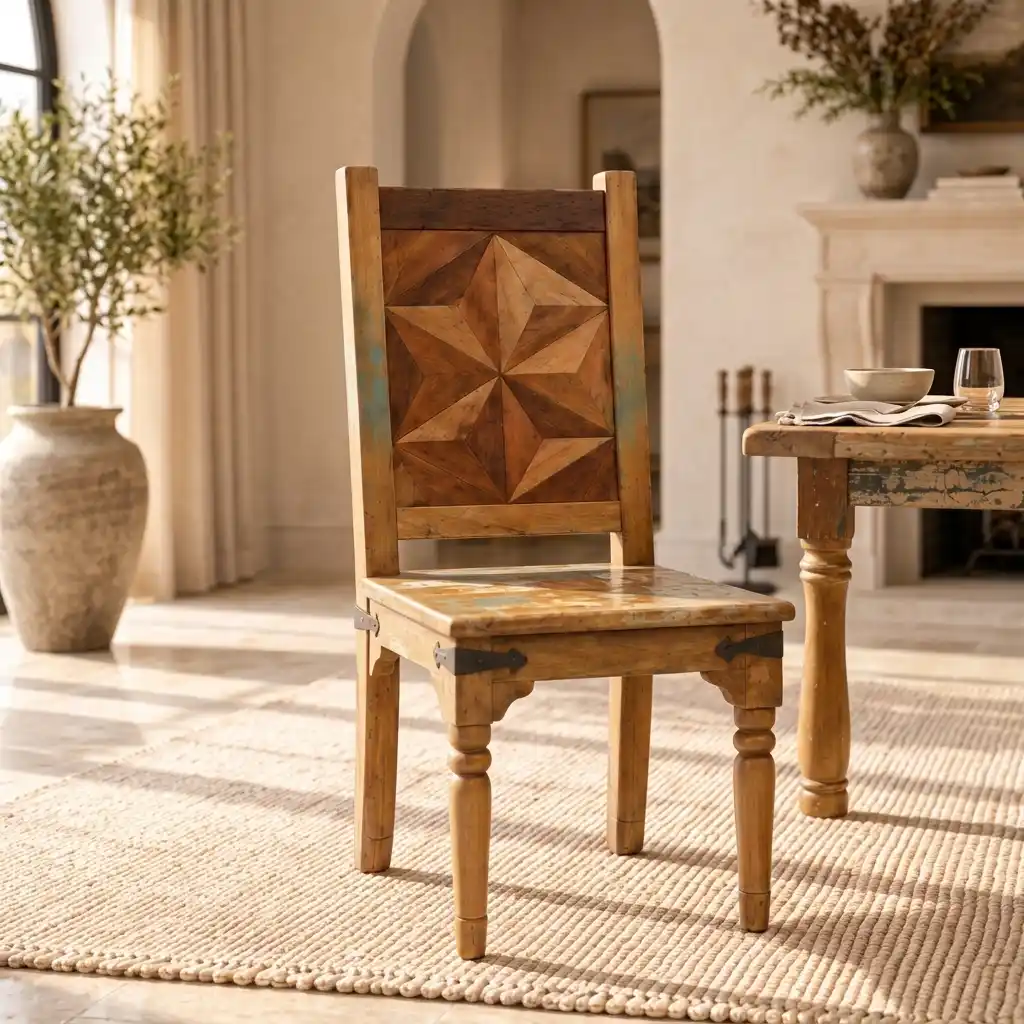
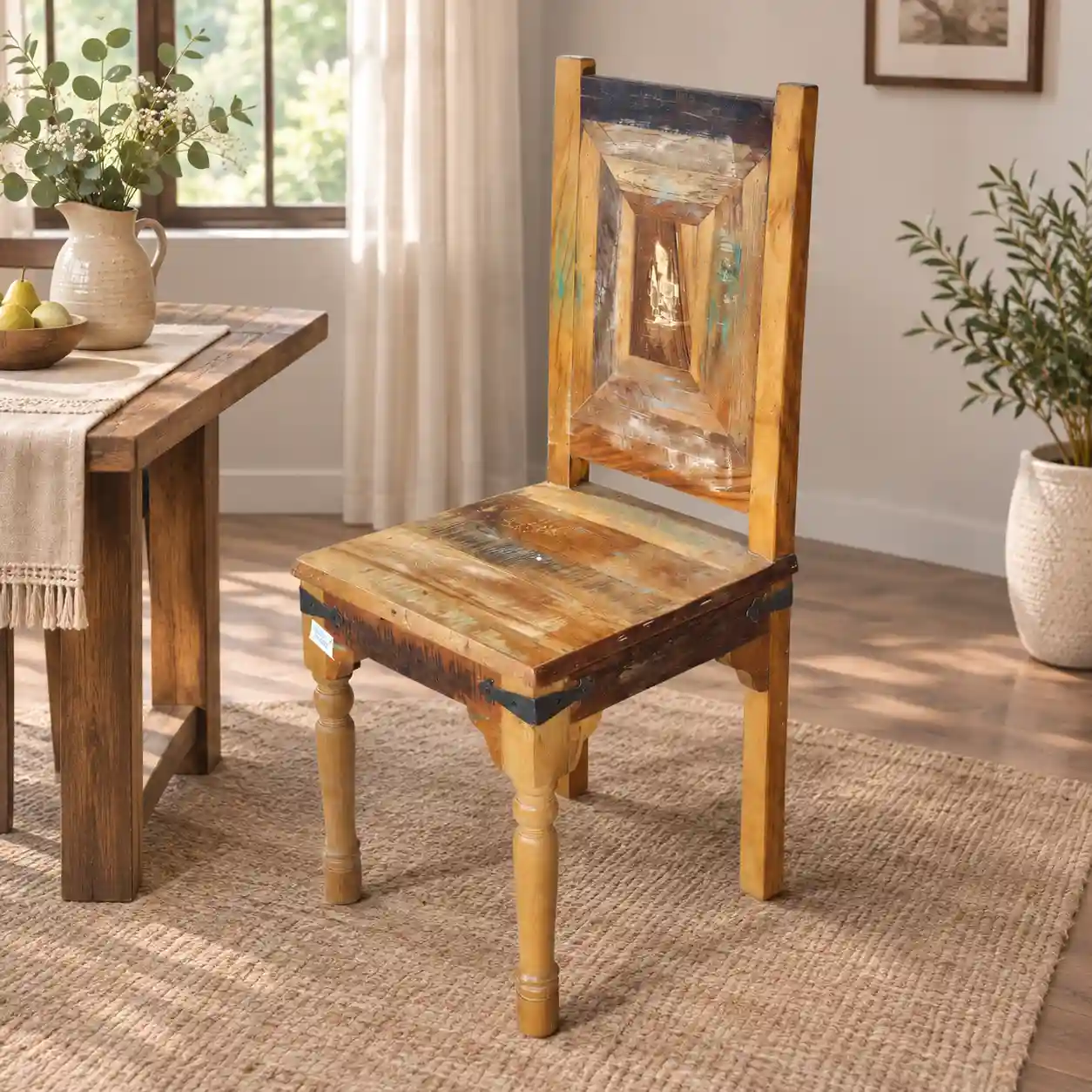
The Palmyra Kirti Chair draws its inspiration from the historic oasis city of Palmyra along the Silk Road, where Greco-Roman architectural friezes merged with Eastern stone motifs, and the Sanskrit concept of Kirti, which signifies eternal glory and honor. The defining feature of the chair—a deeply carved acanthus leaf scrollwork crest rail—traces its cultural origin to Classical Mediterranean Corinthian capitals and Hellenistic friezes, which travelled across ancient trade routes into Northwestern India during the Gandhara and Indo-Roman eras. Across Rajasthan’s historic havelis and courtyard manors, Indian artisans adapted these scrolling foliage patterns (Bel-Booti) into solid timber door headers and wall panels as symbols of life, growth, and prosperity.
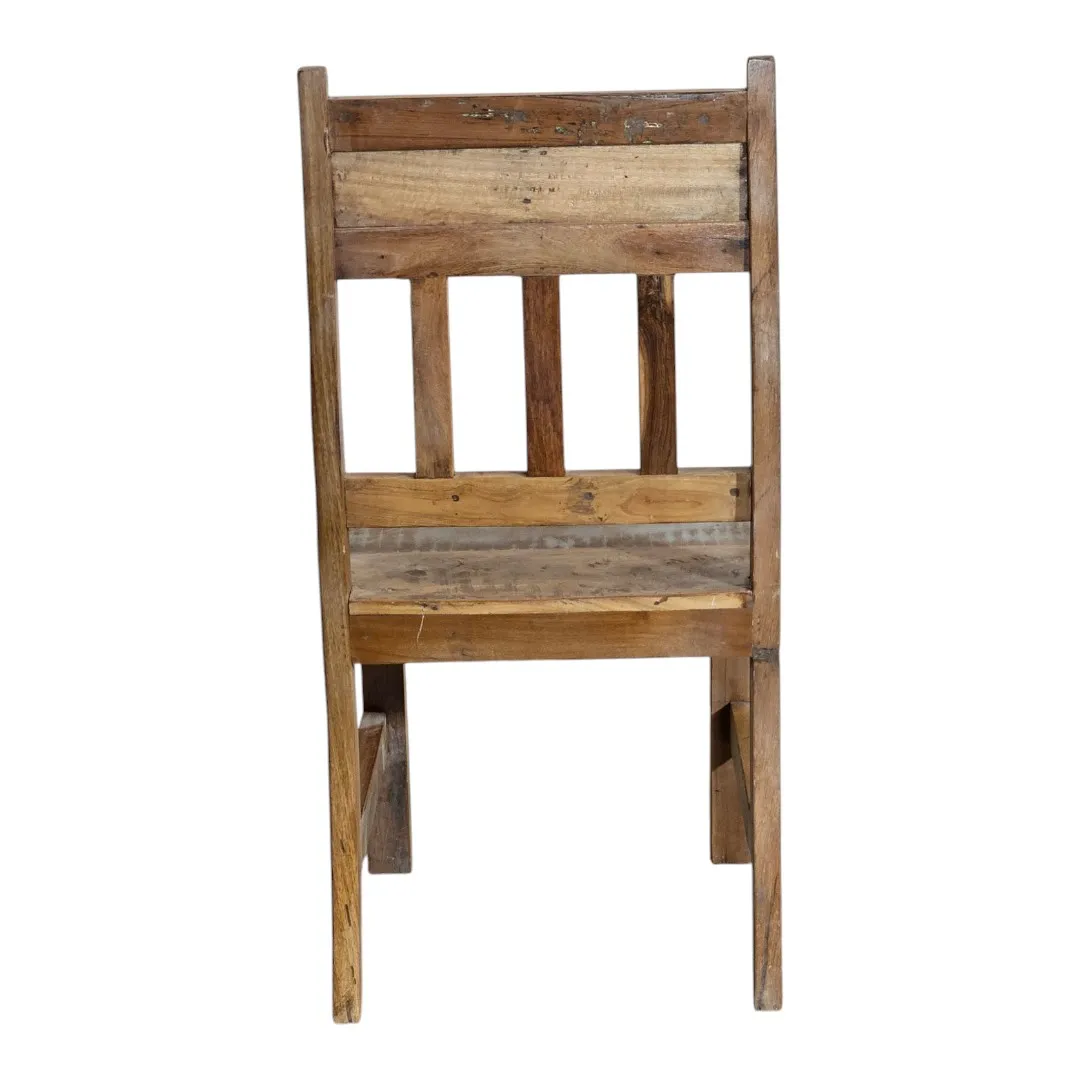
The creation of each piece relies on time-honored woodworking methods passed down through generations. Master artisans in Northwestern India hand-select aged planks of reclaimed teak wood salvaged from ancestral homes and historical structures. Using steel hand chisels (Rookhi) and wooden mallets, woodworkers relief-carve the foliage scrollwork across the upper rail, sculpting deep dimensional contours into the dense timber. The frame is joined with traditional mortise-and-tenon wood connections, while the front leg posts and seat aprons are gently hand-planed. The surface retains layered traces of original mineral paints—including distressed turquoise, seafoam, and chalky white—which are hand-waxed and hand-sealed to preserve their authentic aged character.
Because each reclaimed timber beam possesses its own distinct grain path, nail markings, and weathered paint density, no two chairs feature identical finishes. The Palmyra Kirti Chair integrates into modern luxury and rustic dining environments, standing as a collectible piece of living history alongside contemporary or traditional dining tables.
STYLE DETAILS
Architectural Influences: Greco-Roman Corinthian Friezes & Rajasthani Haveli Woodwork
Pattern Style: Continuous Acanthus Leaf Foliage Scrollwork & Vertical Slats
Decorative Elements: Relief Hand-Carving, Distressed Multi-Color Pigment Patina
CRAFTSMANSHIP DETAILS
Technique Used: High-Relief Hand-Chiseling (Chhitai), Traditional Mortise Joinery, and Hand-Waxed Distressing
Skill Level Required: Master Wood Artisans (15+ Years Lineage)
Distinguishing Handcrafted Features: Deeply carved leaf veins, visible chisel marks, authentic multi-hued paint patina, natural timber weathering
Finishing Process: Manual Hand-Sanding, Natural Pigment Retention, Hand-Rubbed Matte Wax Seal
RECLAIMED TEAK WOOD FINISH CHARACTERISTICS
Type & Grain Richness: High-density salvaged Indian teak (Tectona grandis) featuring rich interlocking grain, high natural oil content, and warm amber tones
Depth & Texture: Tactile, weathered surface with raw timber pores, subtle grain splits, and layered multi-color pigment depth
Difference from Mass-Produced: 100% authentic reclaimed wood displaying real historical weathering rather than artificial factory distressing
Longevity & Aging: Exceptionally stable due to decades of natural seasoning; continues to mature gracefully over time
WHY YOU’LL LOVE IT / INVESTMENT VALUE
Serves as an architectural statement piece bridging Classical Mediterranean and Indian heritage styles
Brings genuine historical narrative and artisanal character to dining environments
Heavy solid reclaimed teak construction offers heirloom-grade structural durability
Unique color accents guarantee no two chairs share the same patina
SUGGESTIONS FOR INCORPORATION
Surround a raw stone, marble, or unpolished solid wood dining table for a tactile dining space
Position as an accent seating pair in a grand foyer alongside an artisan console table
Style in a sunlit breakfast room or library setting against plaster or brick walls
DETAILED SPECIFICATIONS
Color: Warm Honey Teak with Distressed Turquoise, Mineral Blue, and Cream Pigment Accents
Finish: Hand-Rubbed Matte Wax Seal
Origin: India
Age/Period Influence: Classical Mediterranean & Indo-Colonial Fusion
PERFECT FOR
Formal Dining Rooms, Foyer Galleries, Executive Home Offices, Breakfast Nooks
INTERIOR TYPES
Modern Luxury, Rustic Farmhouse, Wabi-Sabi, Indo-Colonial, High-End Eclectic, Bohemian Chic