Keep away from direct heat sources to prevent timber movement. Clean with a dry brush to reach into carved crevices.
Product code: 18745 A
Dimensions: 40 (Length) x 90 (Width) x 170 (Height) cm
Material: Solid Hardwood, Hand-Forged Iron.
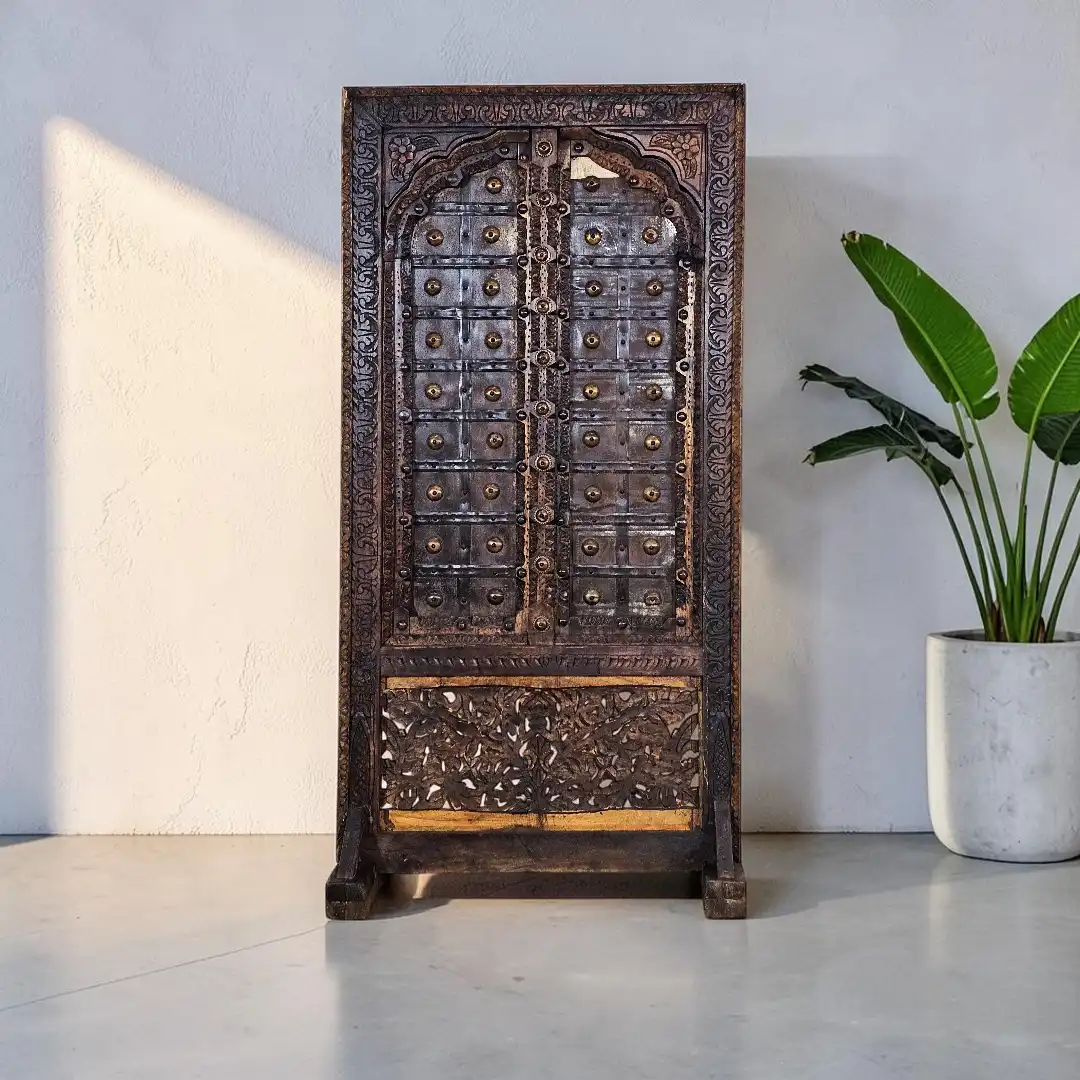
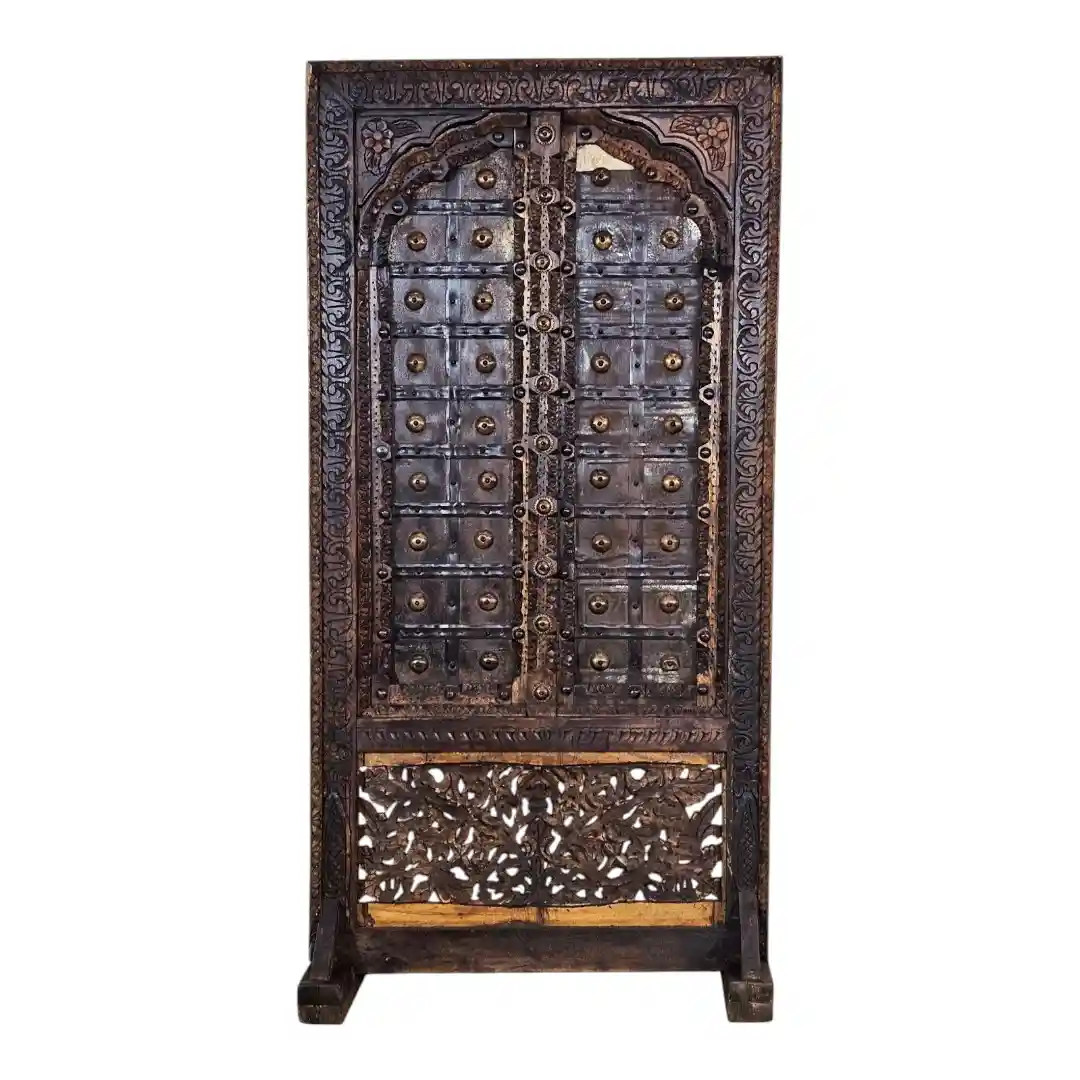
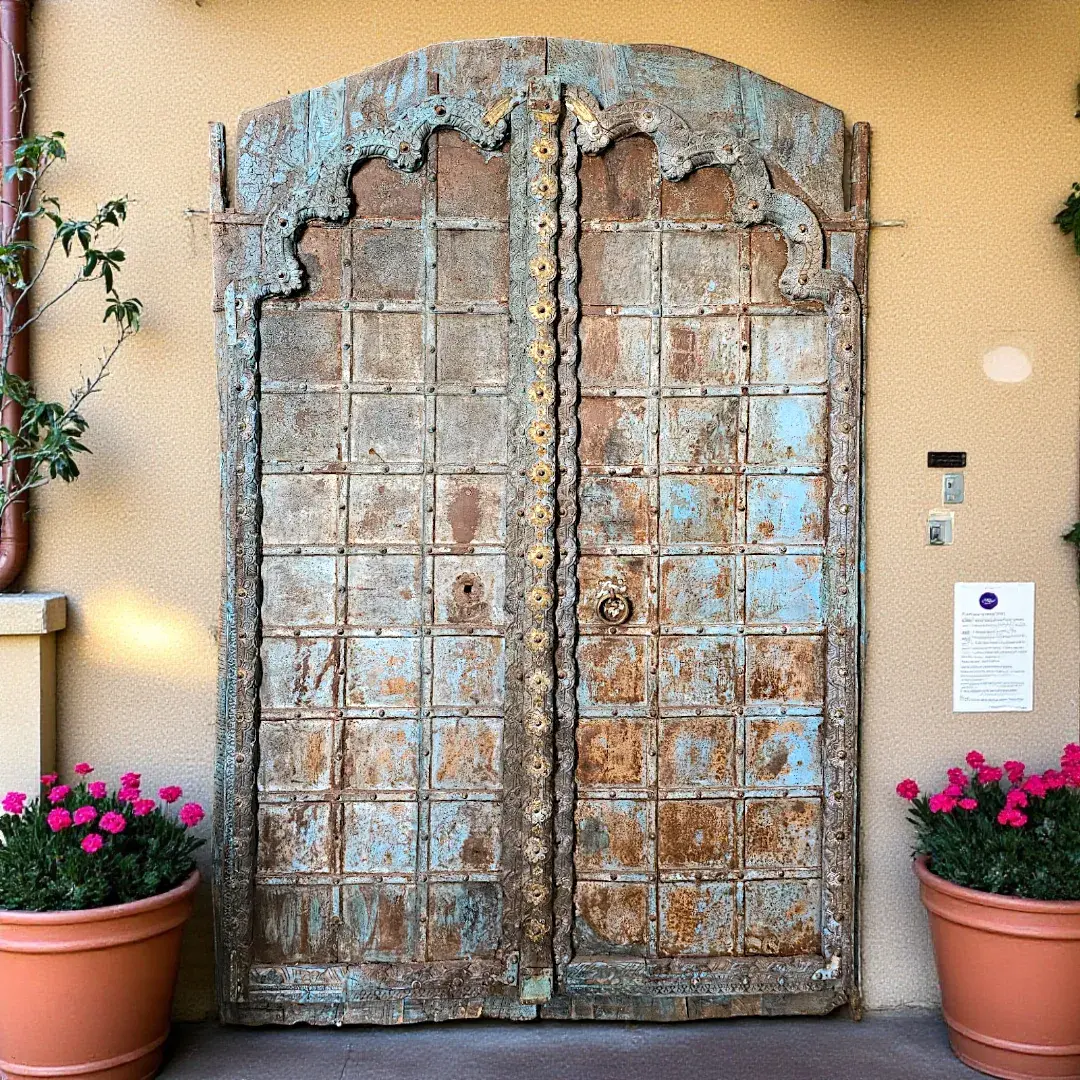
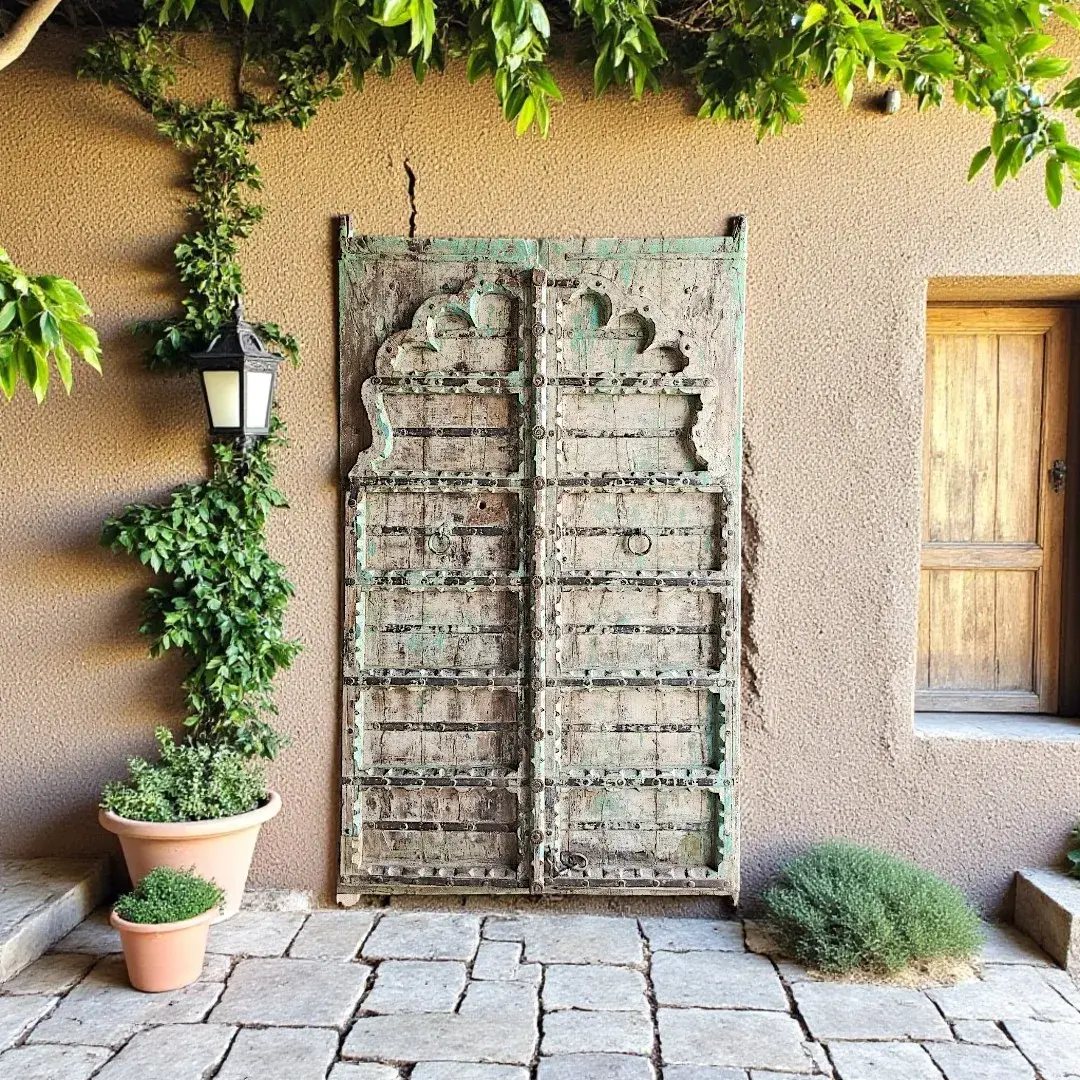
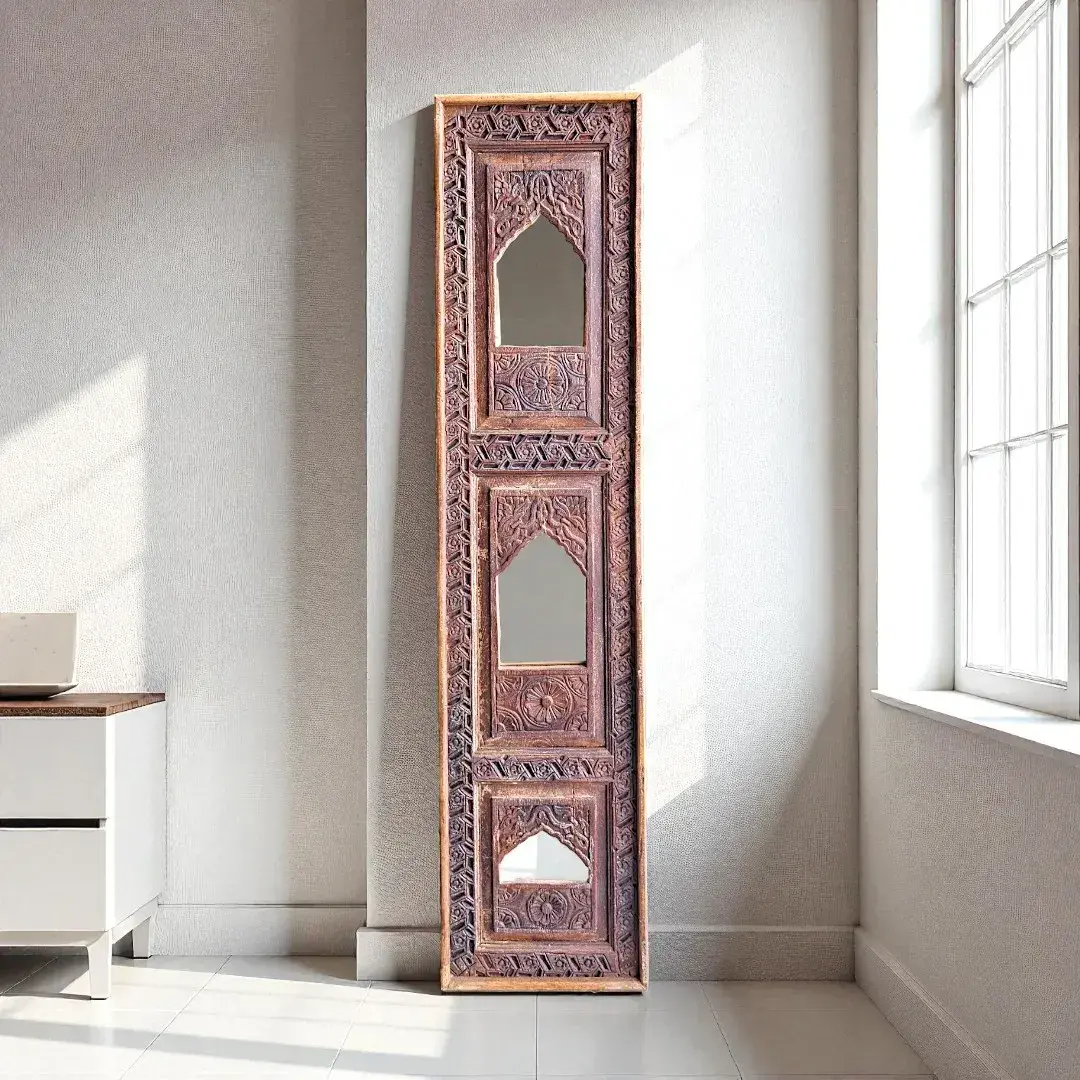
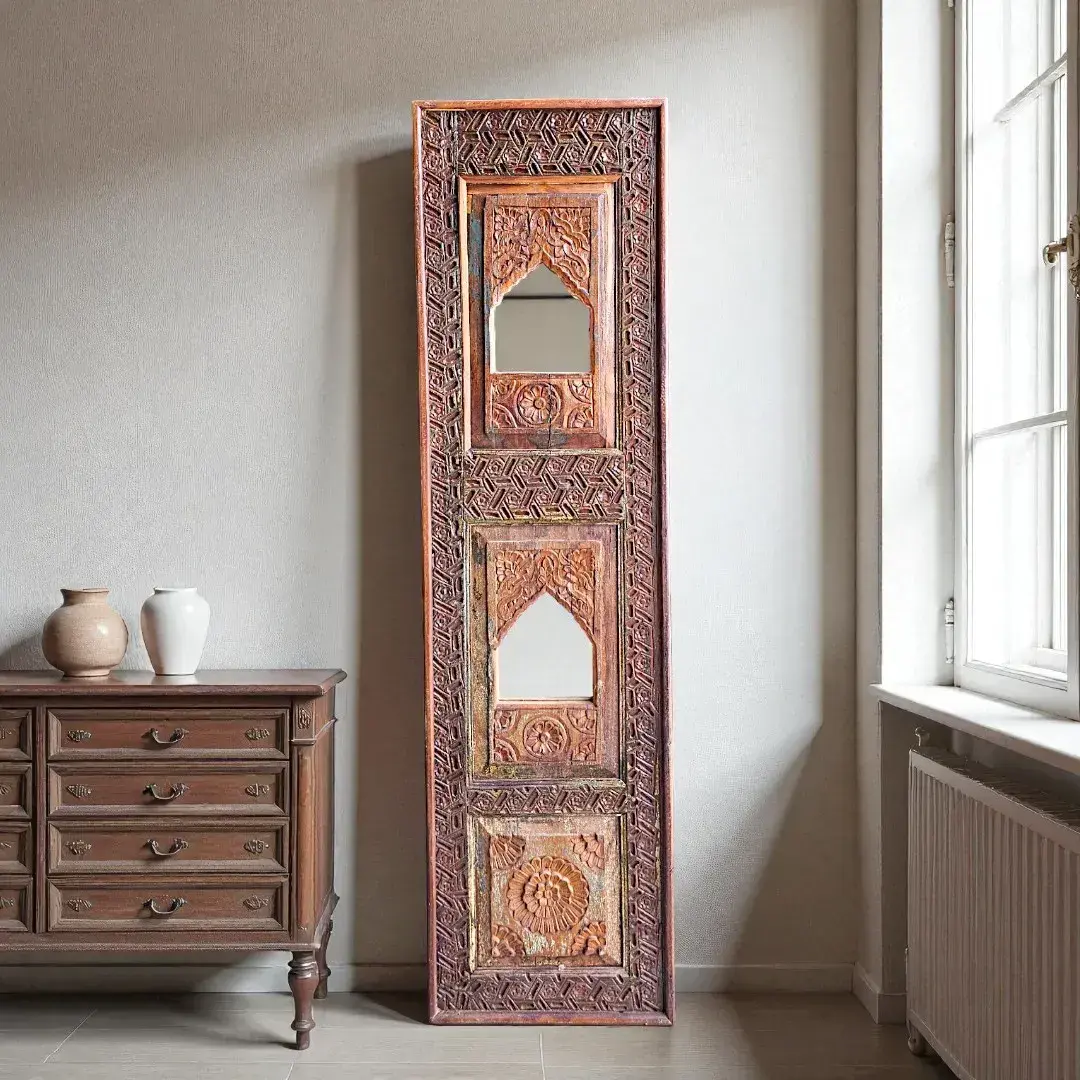
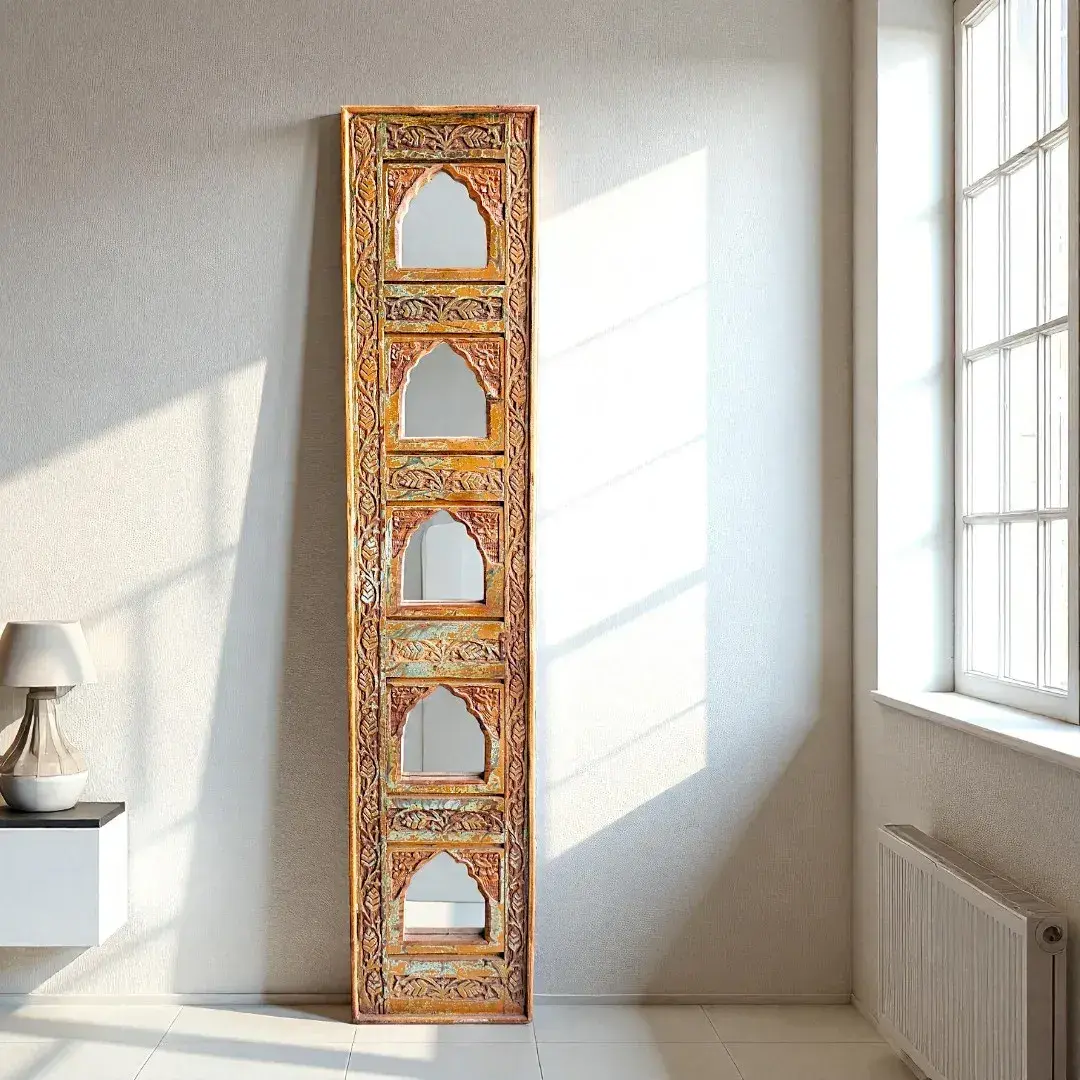
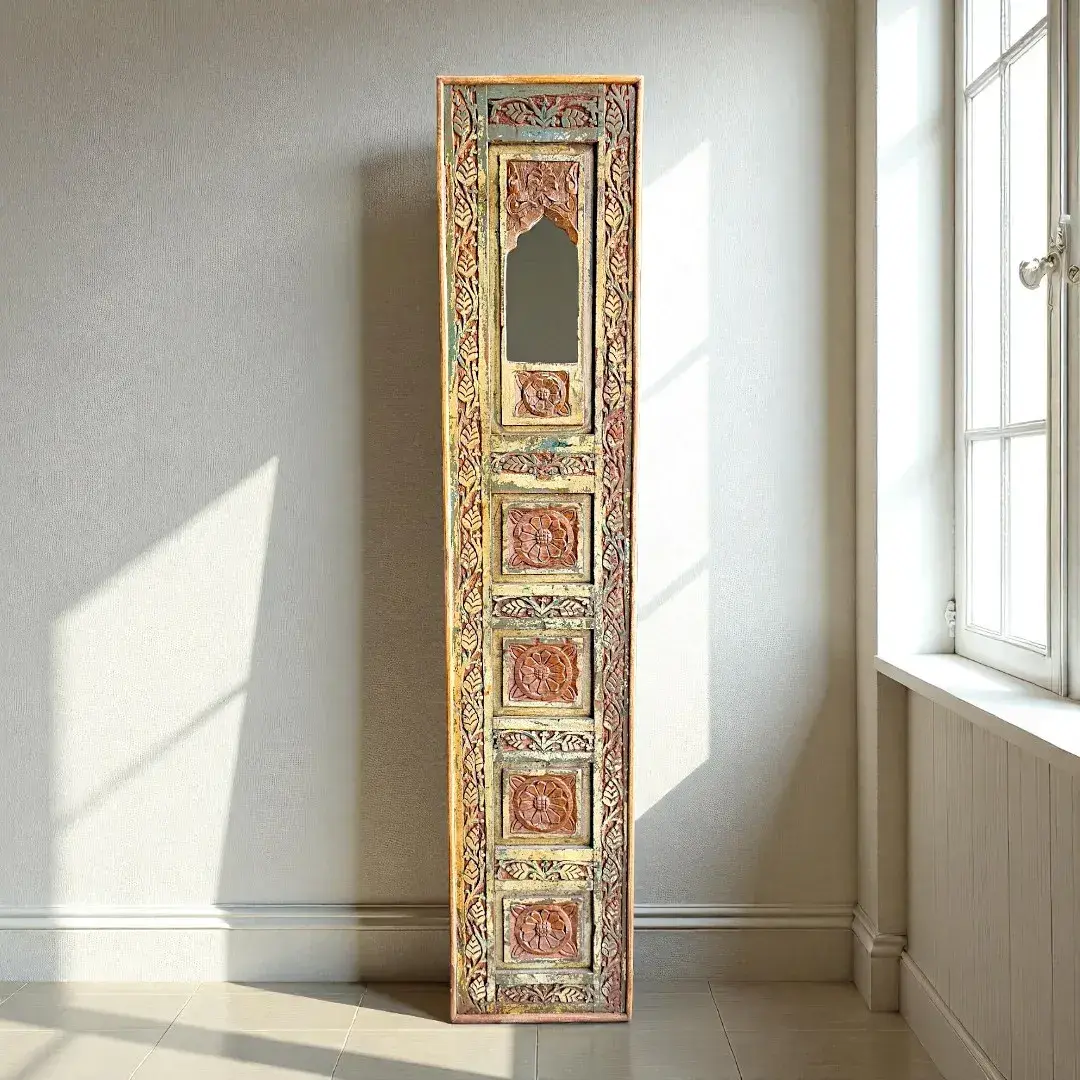
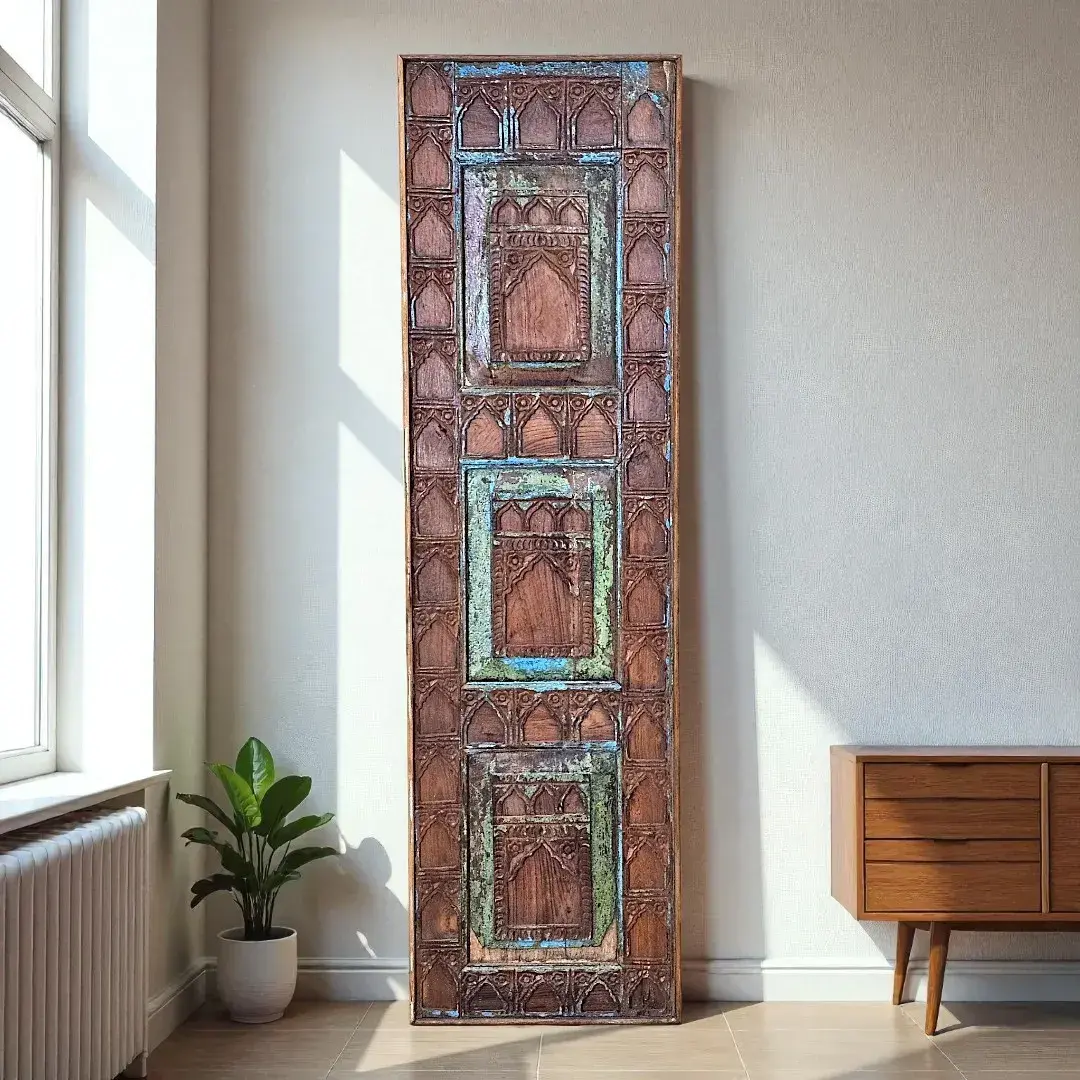
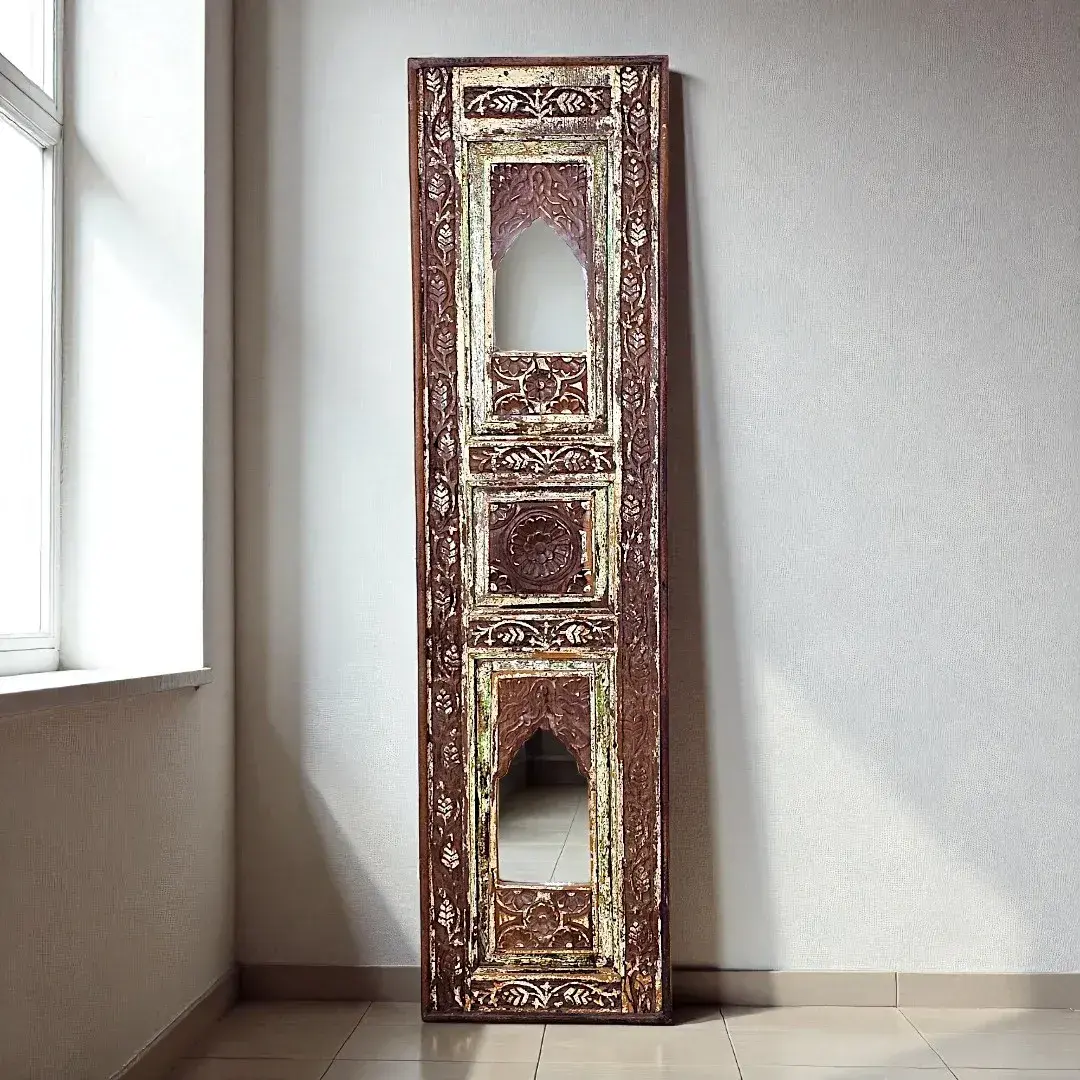
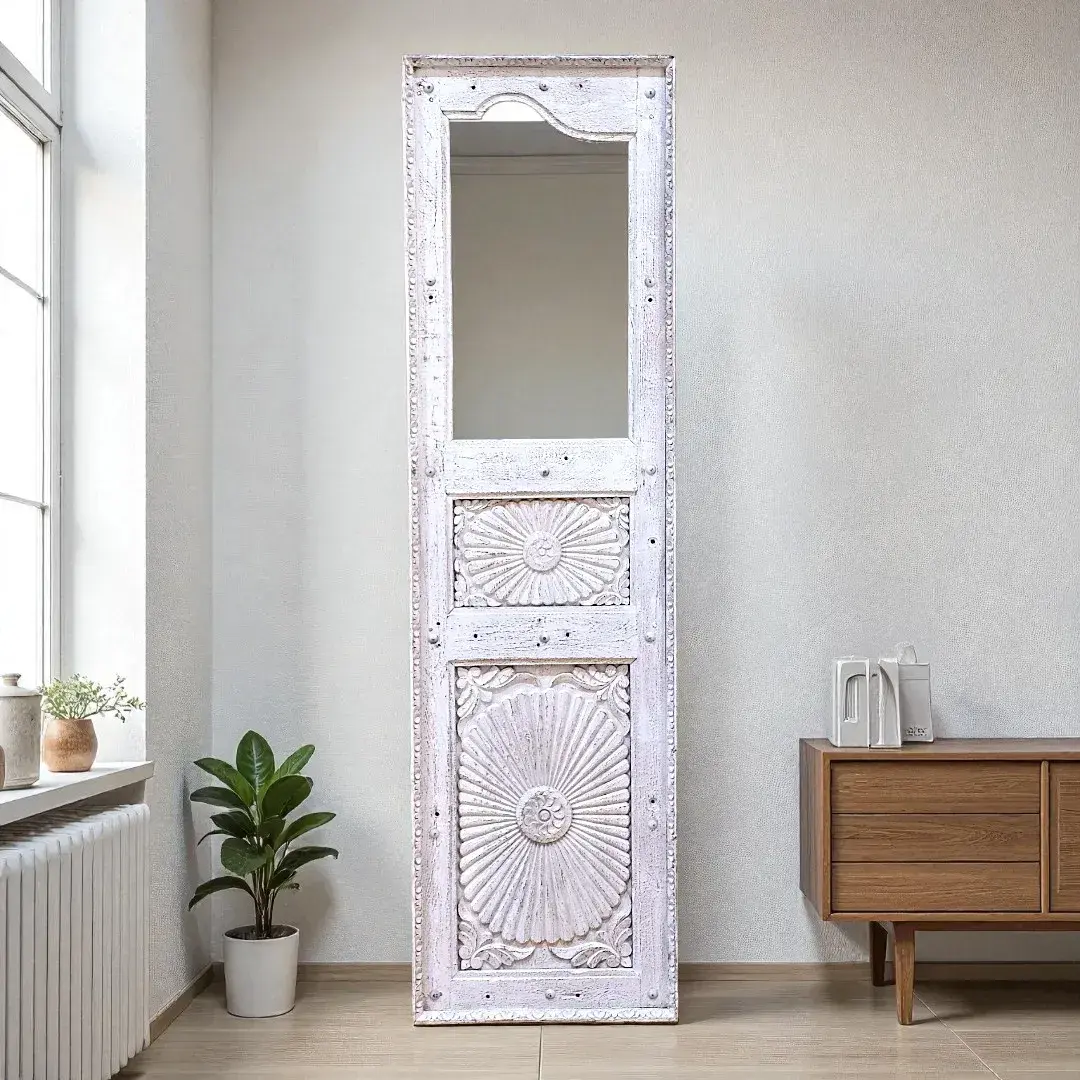
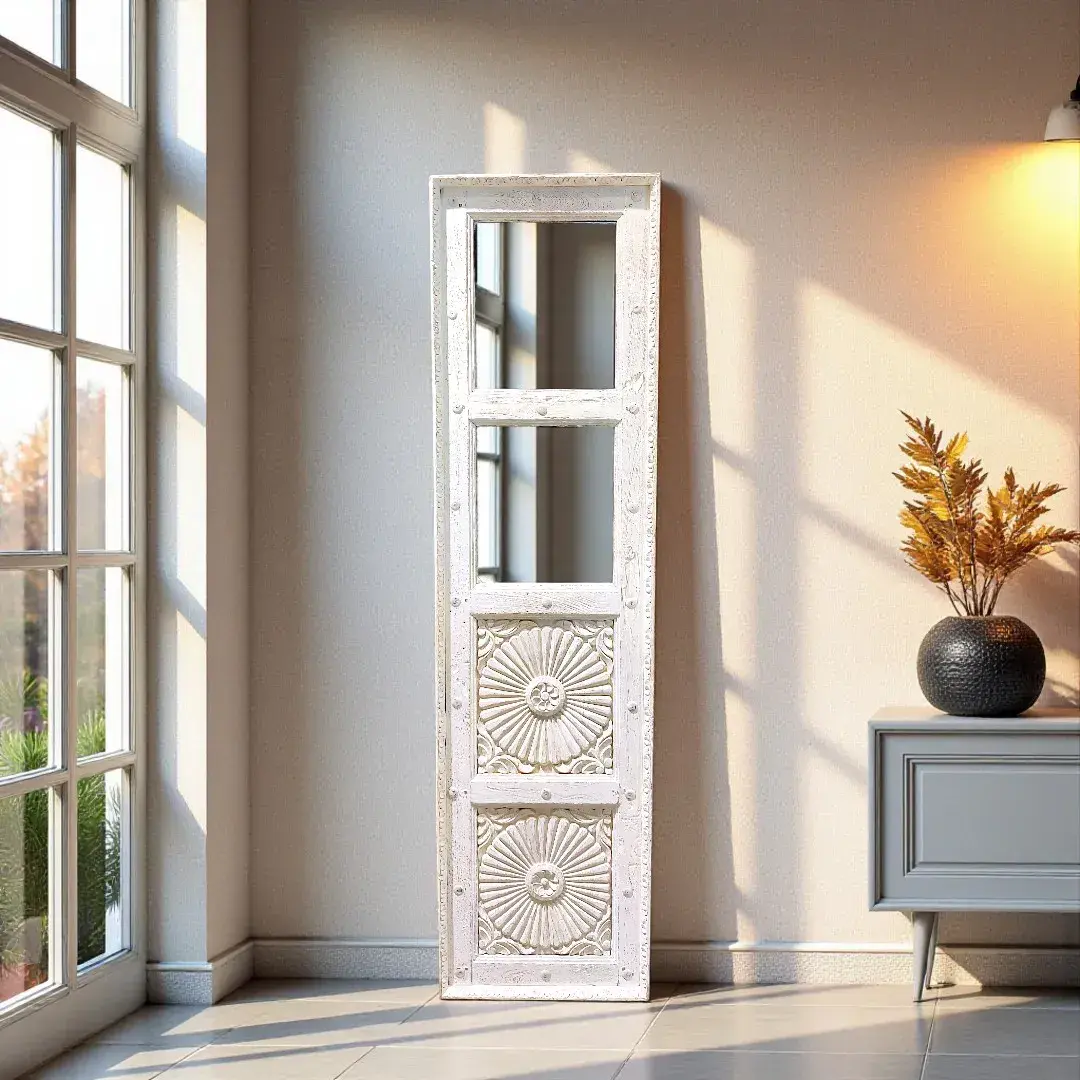
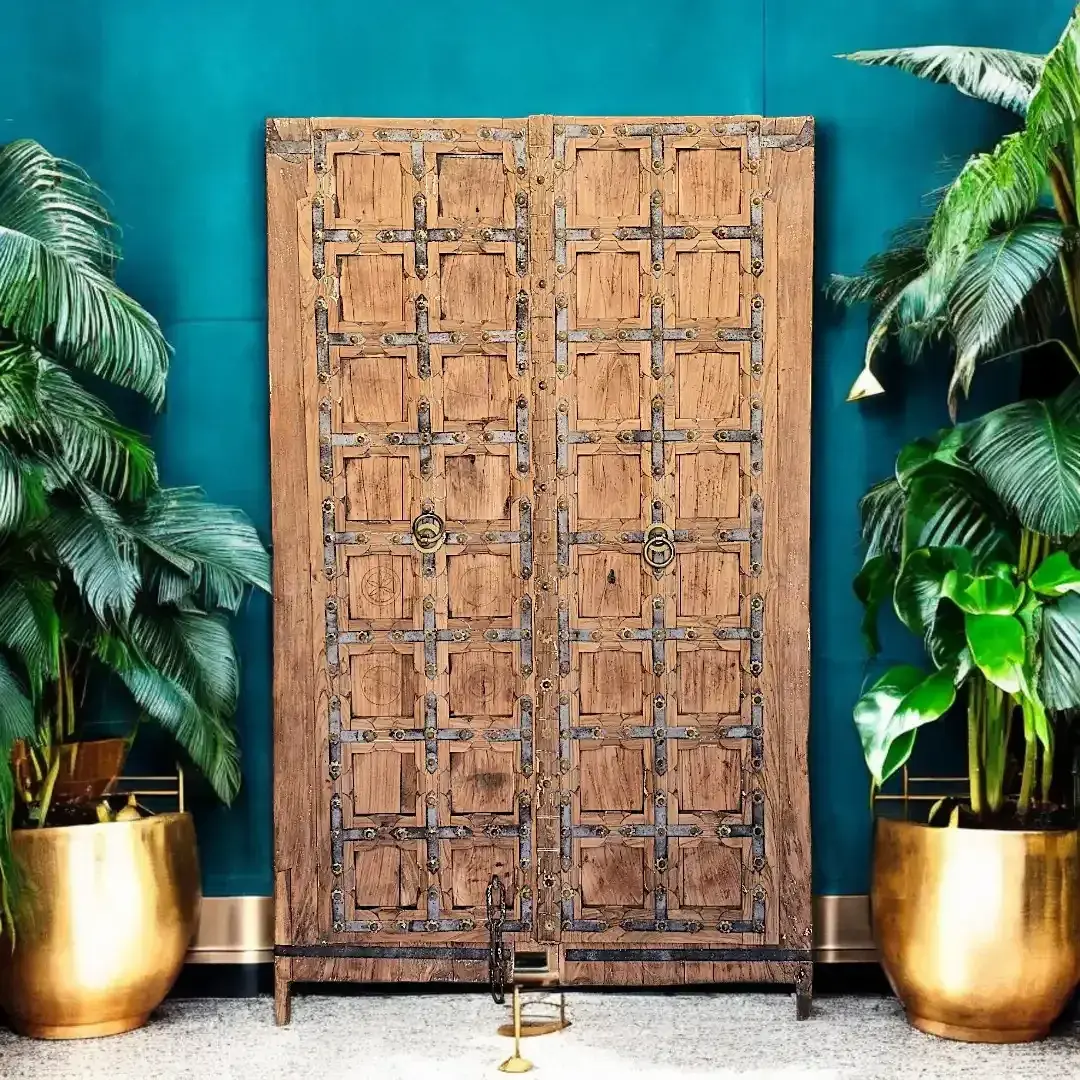
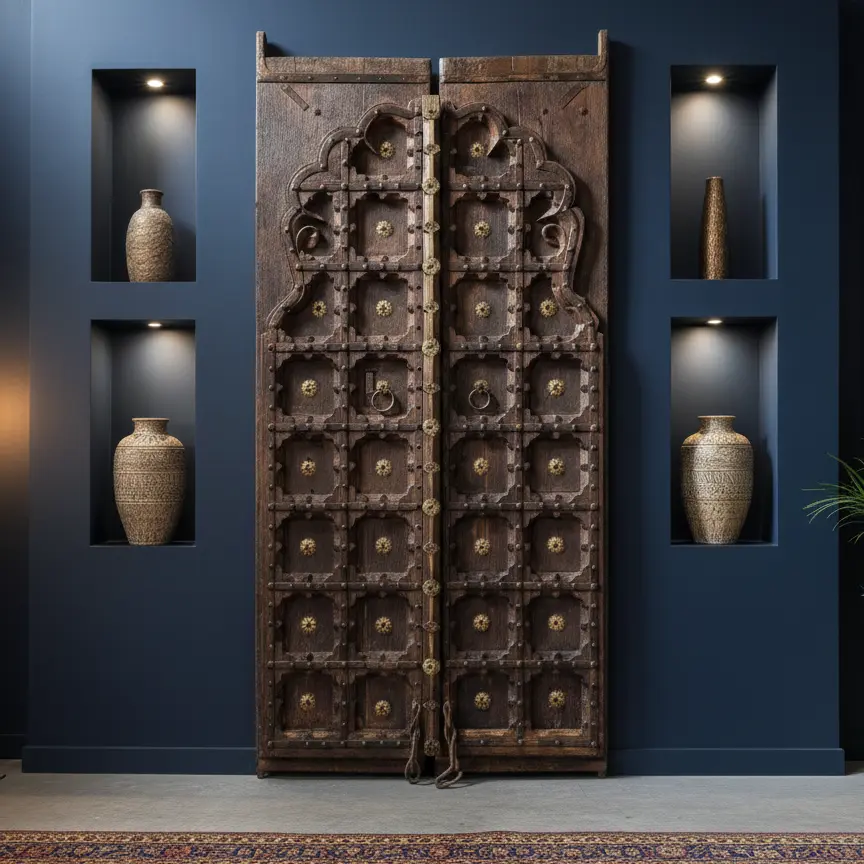
An imposing work of architectural scale, this screen is salvaged from the fortified estates of Northern India. Rendered in massive, hand-carved timber and accented with weathered iron, it represents the pinnacle of "Wabi-Sabi" luxury—where the beauty of age meets the precision of ancient craftsmanship.
FEATURES
This Fort Screen is a definitive example of sculptural presence, designed for spaces that demand weight and history. Borrowing from the defensive architecture of 19th-century Rajasthan, the screen utilizes the "Tarkashi" philosophy of merging metal and wood. The rhythmic placement of iron bosses across the central panels creates a brutalist yet refined texture, a nod to the heavy-timbered gates of Indian desert citadels.
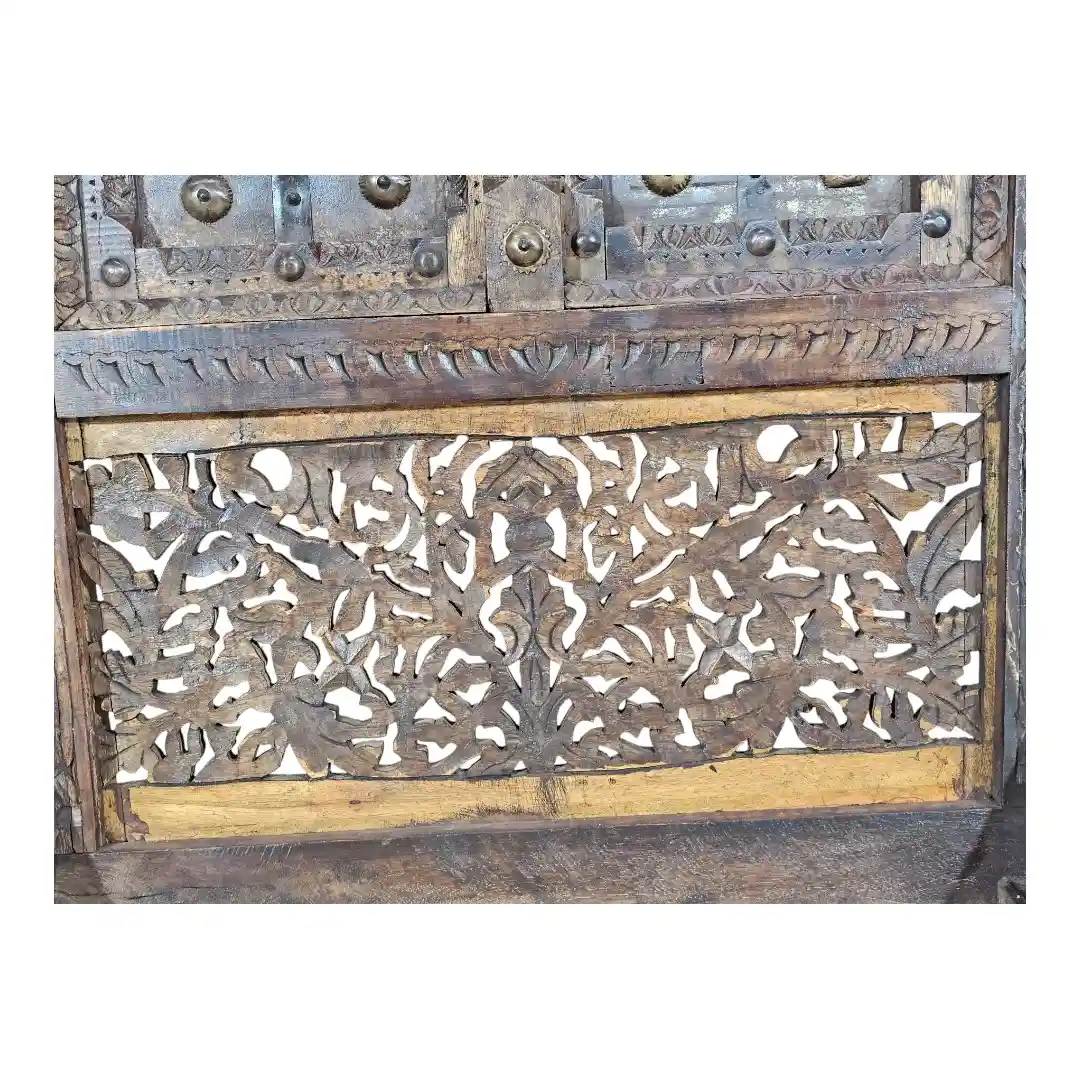
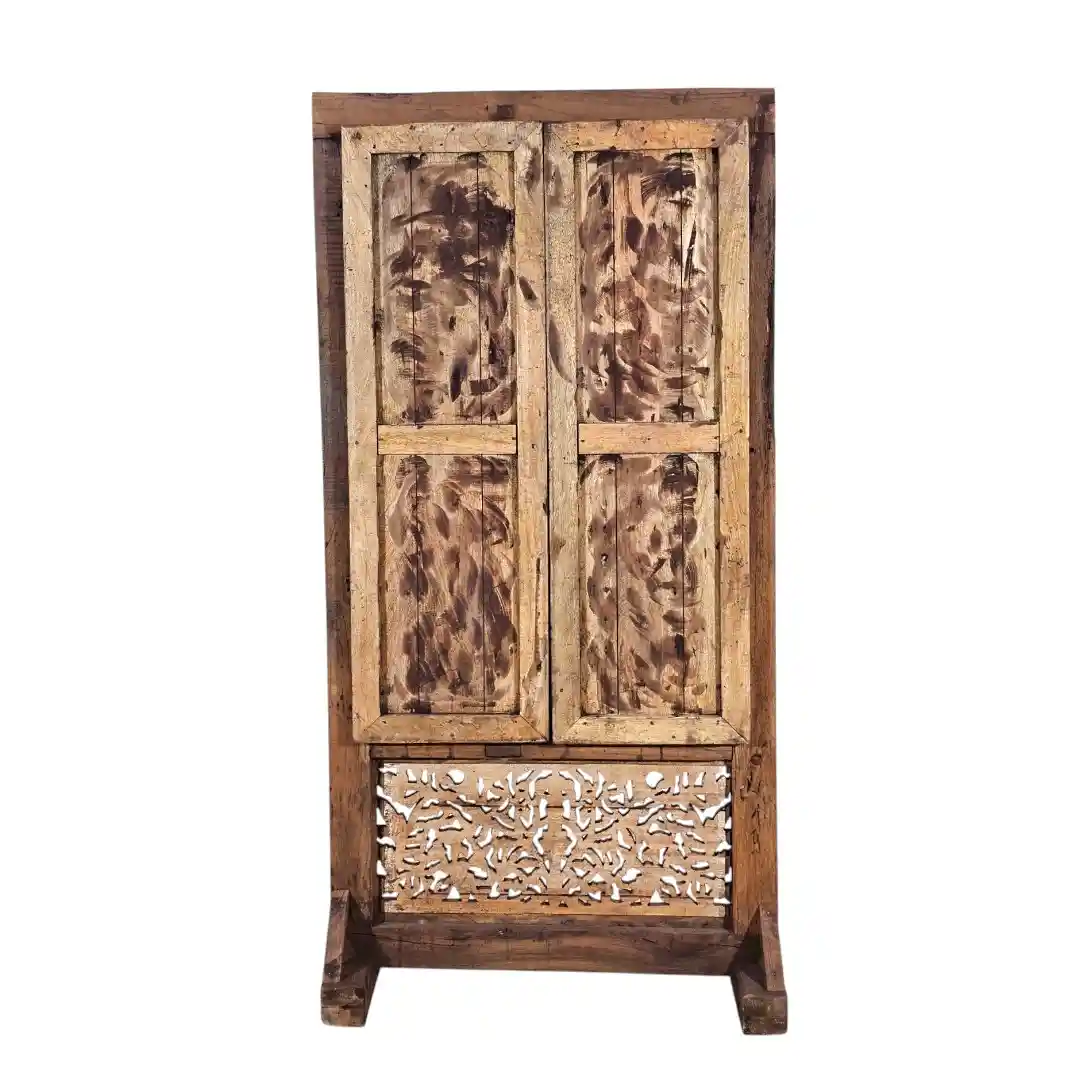
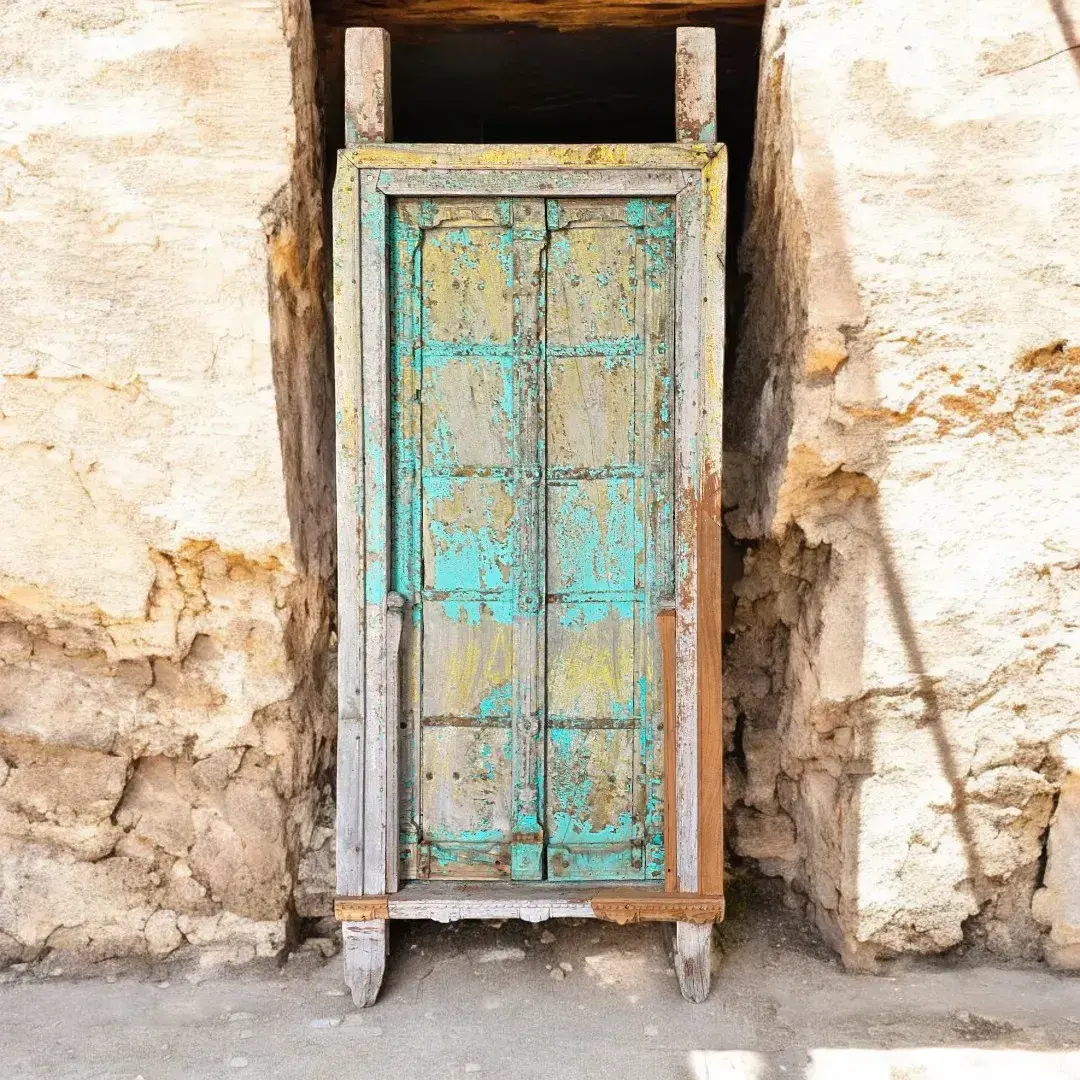
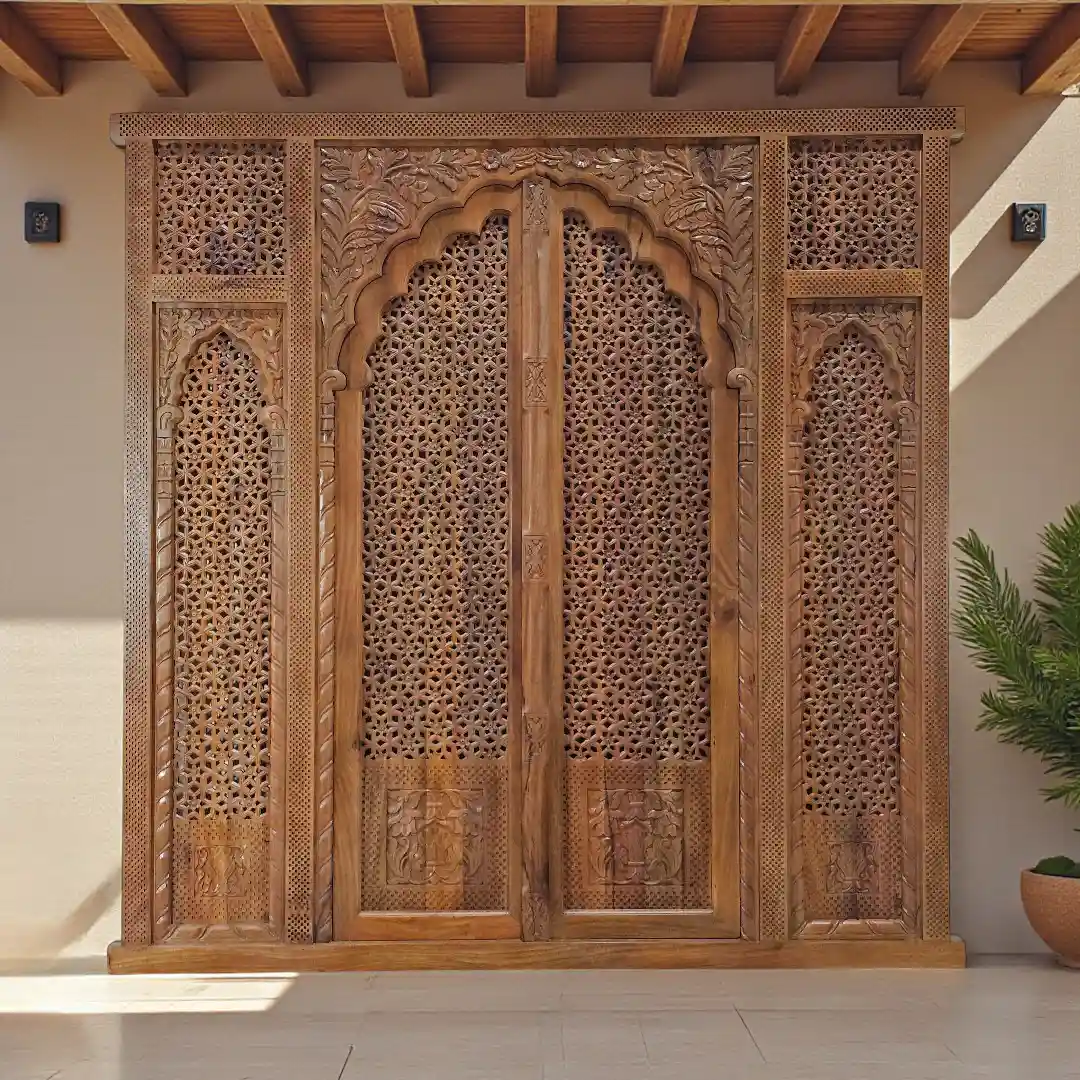
The carving process is entirely reductive; artisans spend weeks removing material from a single, massive slab of wood to reveal the ornate borders and the arched "Mihrab" silhouette. This is high-difficulty craftsmanship where a single misplaced strike of the mallet can ruin the entire composition. The wood—a dense, old-growth timber—is selected for its ability to withstand the test of time. The finish is achieved through a meticulous aging process involving natural pigments and hand-sanding to reveal the silvered grain beneath the dark exterior. Each variation in the wood, every slight asymmetry in the carving, is a deliberate celebration of the human hand. It is an heirloom-quality acquisition that brings a sense of curated, museum-tier history to the contemporary home, bridging the gap between a rugged past and a refined present.
STYLE DETAILS
Influence: Fortress Architecture (Marwar region).
Pattern: Repeating circular bosses and acanthus-style border scrolls.
Elements: Recessed paneling and sun-bleached wood highlights.
CRAFTSMANSHIP DETAILS
Technique: Chisel-carving and cold-hammered metalwork.
Skill: Expert-level mastery of architectural restoration.
Finishing: Burnished edges and hand-applied soot-stain for depth.
WOOD QUALITY & FINISH CHARACTERISTICS
Heavyweight hardwood with a tight, interlocking grain. The texture is tactile and "earthy," lacking the plastic-smooth feel of mass-produced veneer.
WHY YOU’LL LOVE IT / INVESTMENT VALUE
It elevates a room from "designed" to "collected." The sheer architectural weight provides an emotional grounding that lighter, modern pieces cannot provide, making it a permanent fixture in a high-end collection.
SUGGESTIONS FOR INCORPORATION
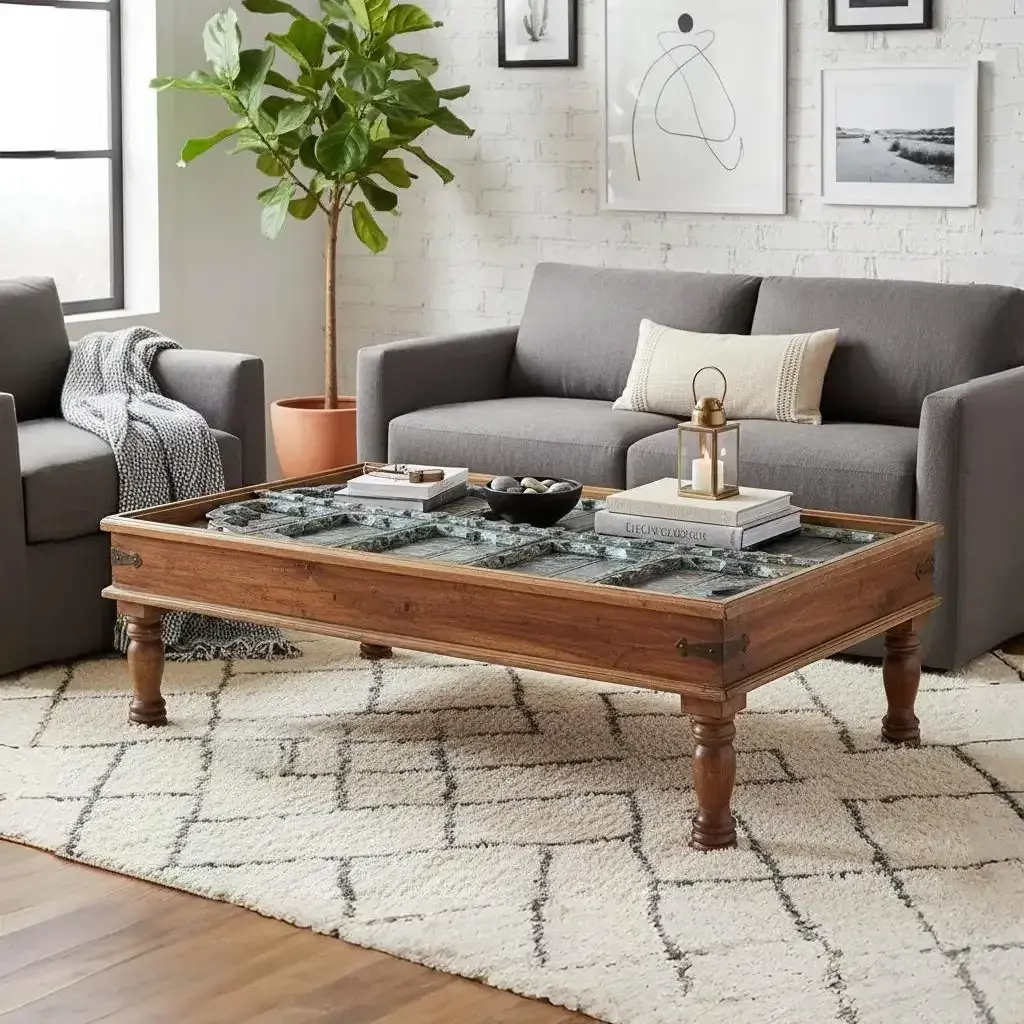
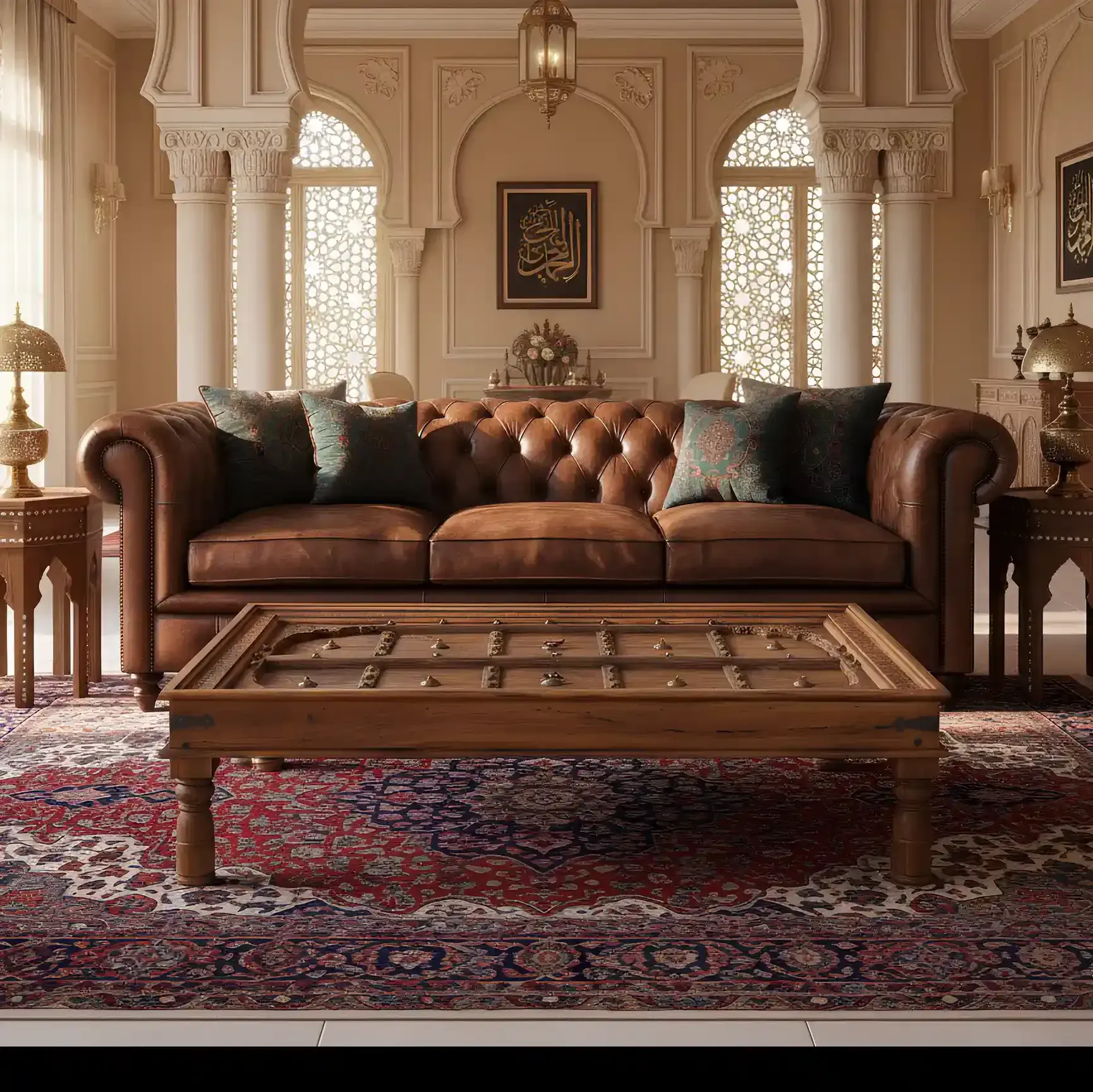
Use it to flank a large-scale fireplace or place it behind a contemporary sofa to provide a textured, dark contrast to neutral upholstery and clean lines.
DETAILED SPECIFICATIONS
Color: Weathered Ebony and Iron.
Finish: Matte, Distressed Wax.
Origin: Northern India.
Period: 19th Century British Raj/Fortress Influence.
PERFECT FOR
Great rooms with vaulted ceilings.
Private libraries or study spaces.
INTERIOR TYPES
Industrial Luxury, Brutalist, Wabi-Sabi, Minimalist, Rustic Modern.
No reviews for this product variant yet. Shop the product to add reviews